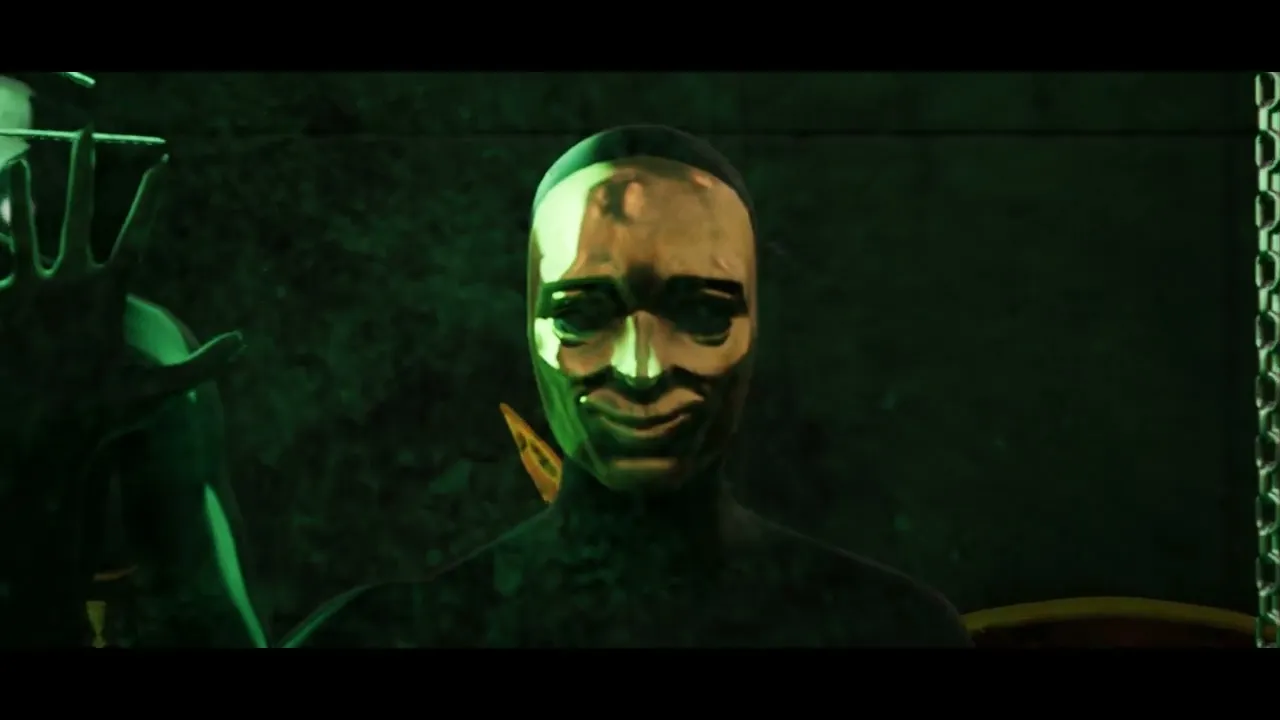
Lust
Unlock desire. One room at a time.
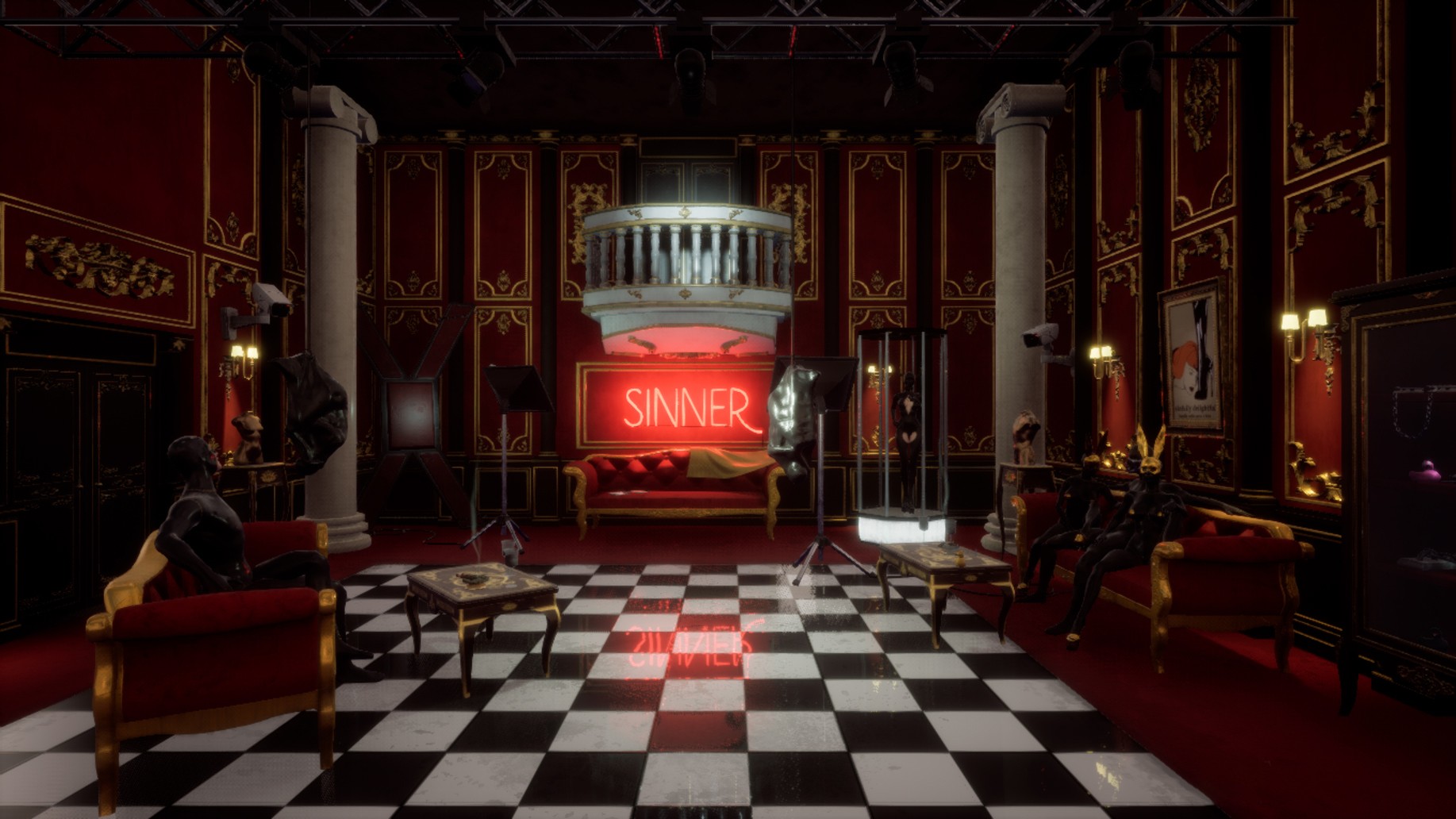

PITCH:
You wake up in an unfamiliar place. Around you, masked figures watch in silence. Trapped inside a house ruled by a Mistress, you must uncover each subject’s desires and satisfy them to escape. Every action is observed, evaluated, and can lead to failure.
ROLE & CONTEXT
Role: Game & Level Designer, Level/Lighting & 3D Artist
Platform: PC | Genre: 1rst person Puzzle Horror Game | Engine: Unreal Engine
Team: 6 | Duration: 5 months
Project Year: 2024
TOOLS
Unreal Engine, Clip Studio Paint, Maya, Archicad, Miro, Google docs & slides
GAME INSPIRATION
This project was inspired by Lust from Beyond and Resident Evil Village, particulary the Castle Dimitrescu. The level design emphasizes atmospheric tension, environmental storytelling and player vulnerability, using confined spaces, controlled pacing and puzzle-driven progression to create a constant feeling of unease and being observed.
MY MISSIONS
Design systemic puzzle logic based on the Pleasure/Pain gauge, replacing traditional gating systems
Structure room progression to teach, combine and test mechanics across increasing complexity
Build and iterate level layouts to support readability, player guidance and controlled pacing
Design lighting to reinforce player focus, highlight interactables and maintain tension
Lead playtests, identifying readability issues and refining feedback systems to reduce player confusion
RESEARCH PHASE
Researching themes of power dynamics, control and observation to inform gameplay and spatial design, translating them into environmental storytelling, puzzle mechanics and spatial constraints.
Sketching gameplay situations for each room to emphasize restriction, player vulnerability and player-driven interactions.
DESIGN INTENT & VISION
Authority Through Constraint
The player is placed in a position of control, where every interaction has consequences. Progression relies on precision and restraint rather than exploration alone. Incorrect or excessive actions can lead to failure, encouraging observation and deliberate decision-making.
The Panopticon Structure
The level follows a circular layout, reinforcing the idea of constant surveillance. The player is both observer and observed. Sightlines, NPC positioning and audio feedback from the Mistress maintain continuous pressure and can influence player behavior.
CORE SYSTEM DESIGN
The Pleasure/Pain Gauge - Core Loop:
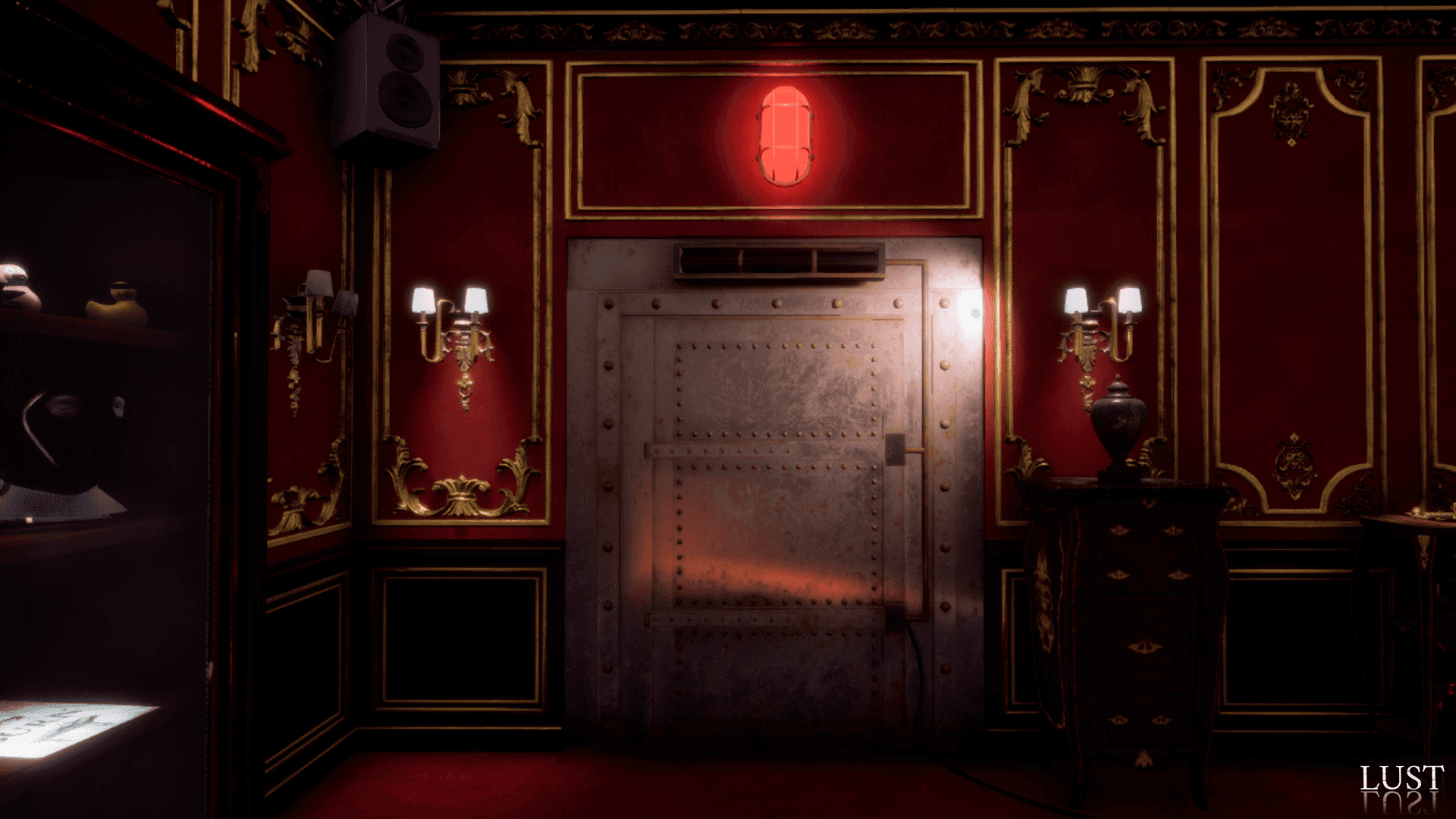
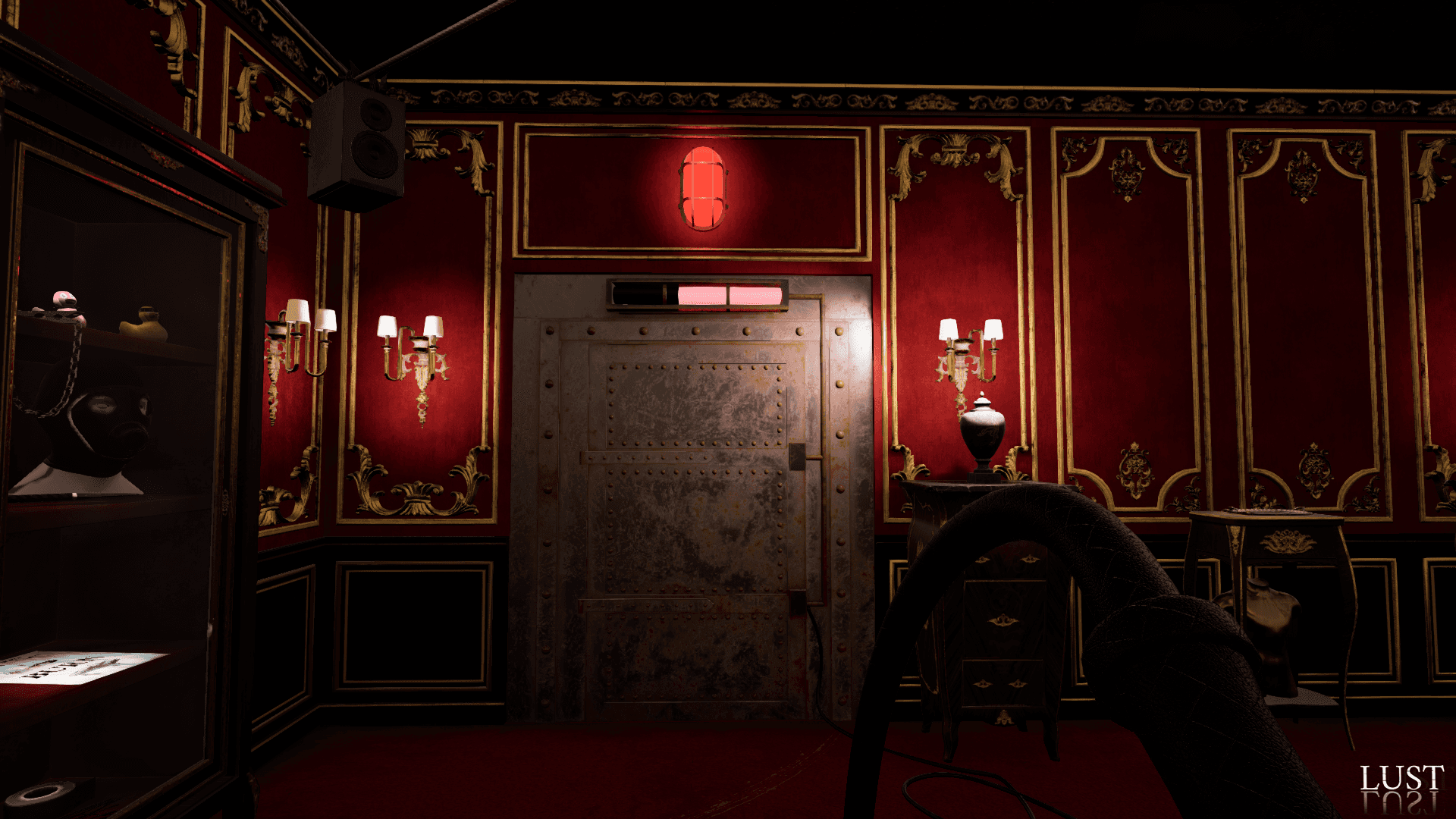
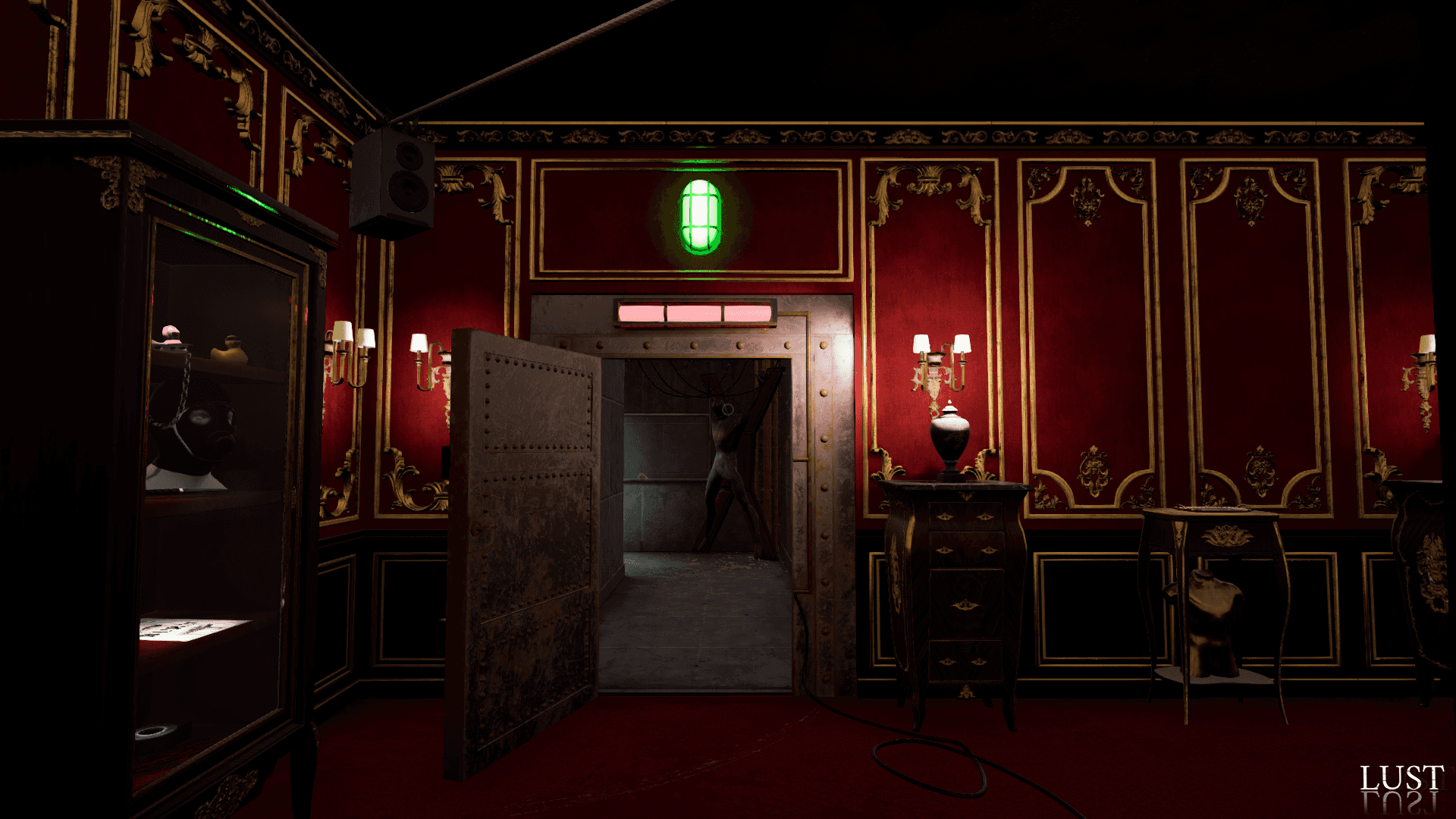
The central progression system evaluates player actions in real time. Instead of collecting keys, players must perform correct interactions to reach a required threshold.
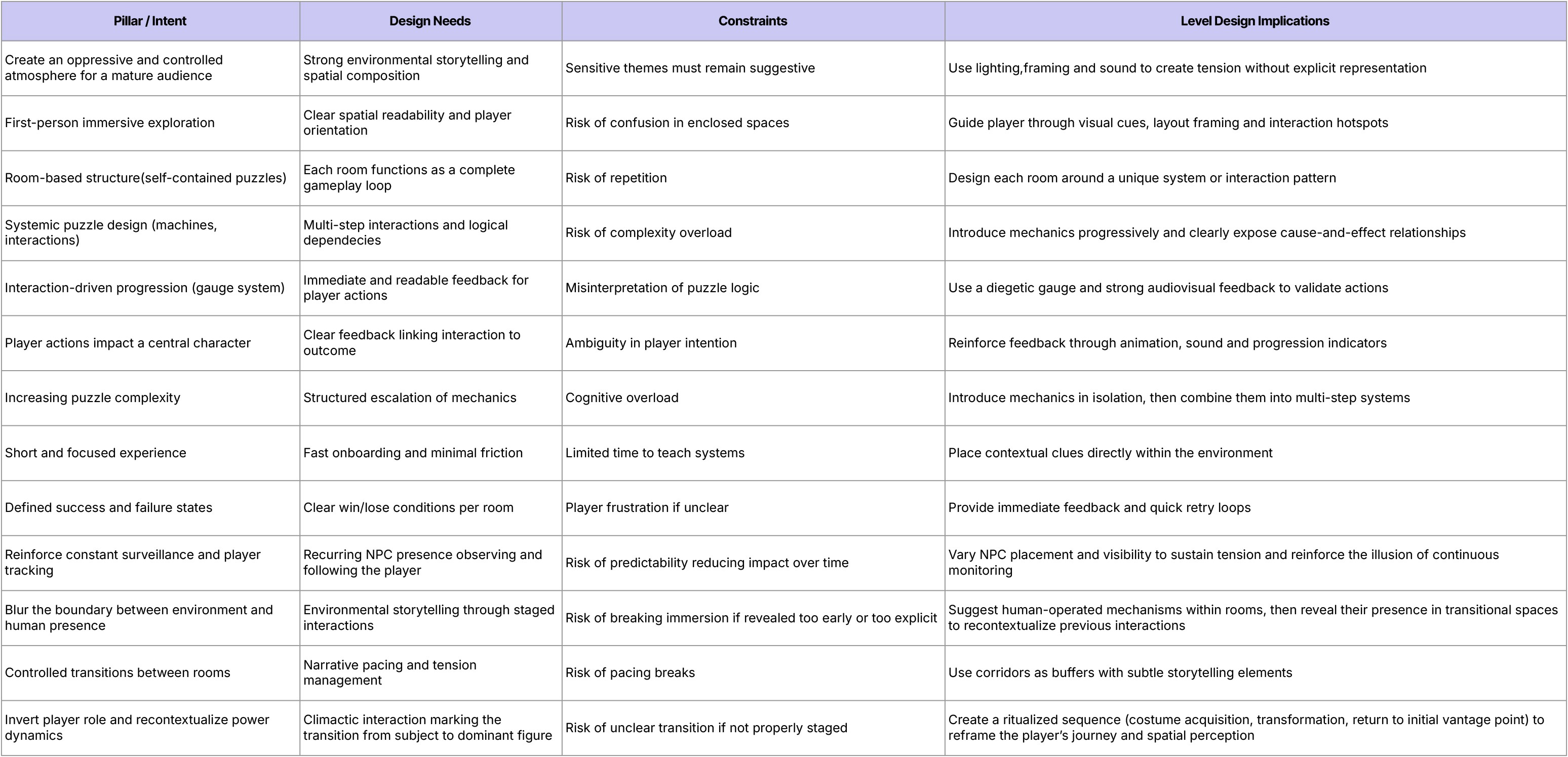
Interaction Logic
Source → Connector → Trigger
Players identify elements, connect them, and activate outcomes. Complexity increases through chained systems and multi-step interactions
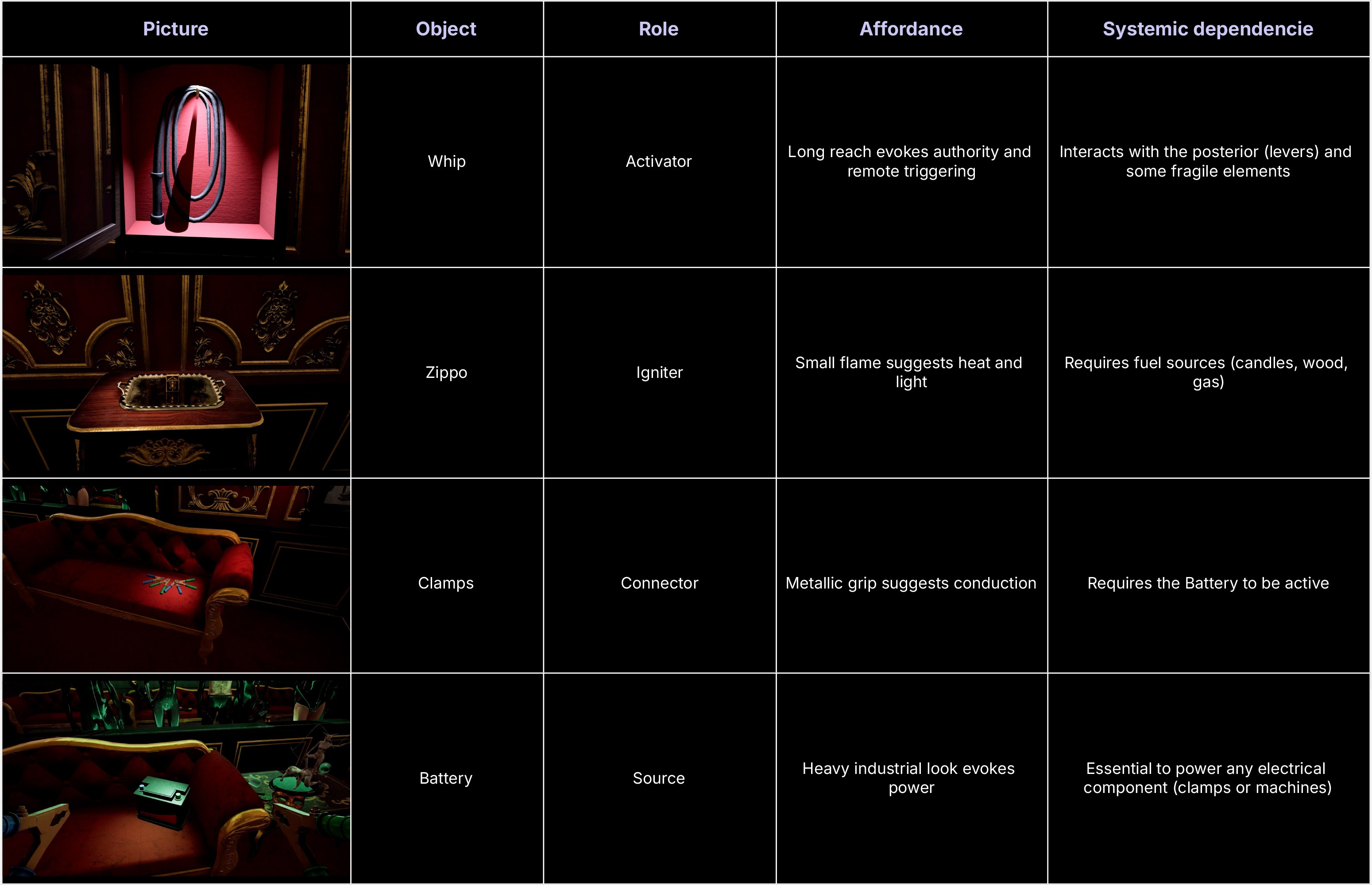
The Whip: Reach & Activation
Long-range activation tool used to trigger distant mechanisms
The Zippo: Thermal interactions
Enables state changes through fire and heat interactions
Battery and Clamps: The power loop
Modular power system encouraging players to build functional circuits
TOOLS & AFFORDANCE BREAKDOWN
To achieve this systemic depth, the gameplay relies on a clear set of tools with distinct affordances. Each object is designed to be intuitively understood, yet their power only unflods through their interdependencies.
LEVEL DESIGN OVERVIEW
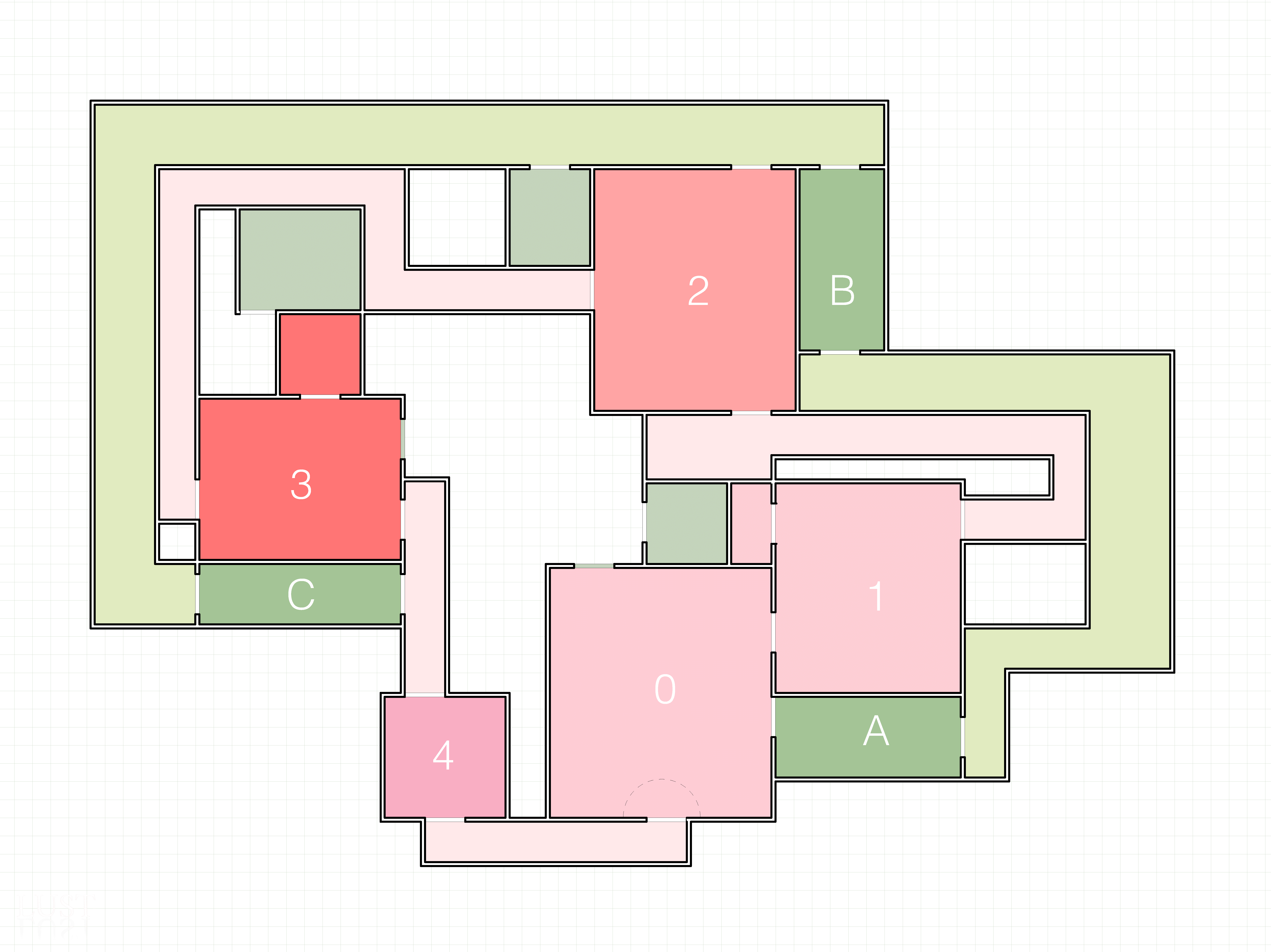
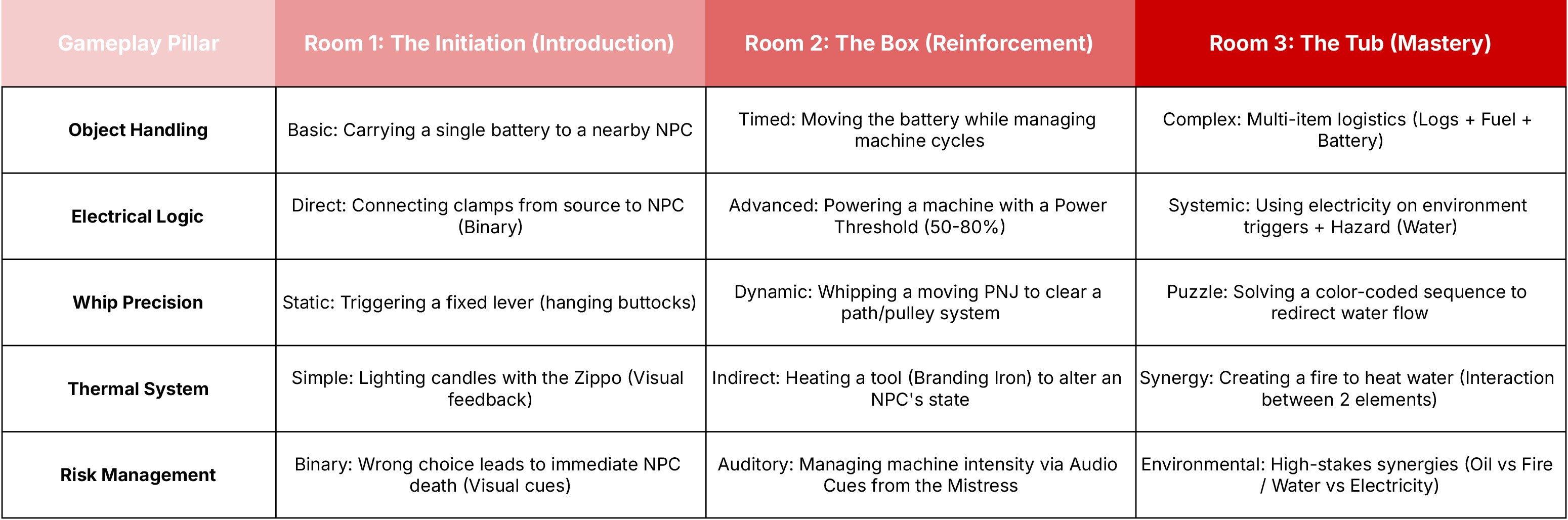
The experience is structured across three contained rooms, each built around a puzzle combining environmental interaction and systemic dependencies.
Progression follows a clear pattern:
Learn → Combine → Master
Room 1: Introduction of core systems
Room 2: Interconnected systems and risk
Room 3: Multi-step puzzles requiring planning and precision
Pacing alternates between observation and execution, with tension driven by failure states and irreversible actions.
LEVEL BREAKDOWN
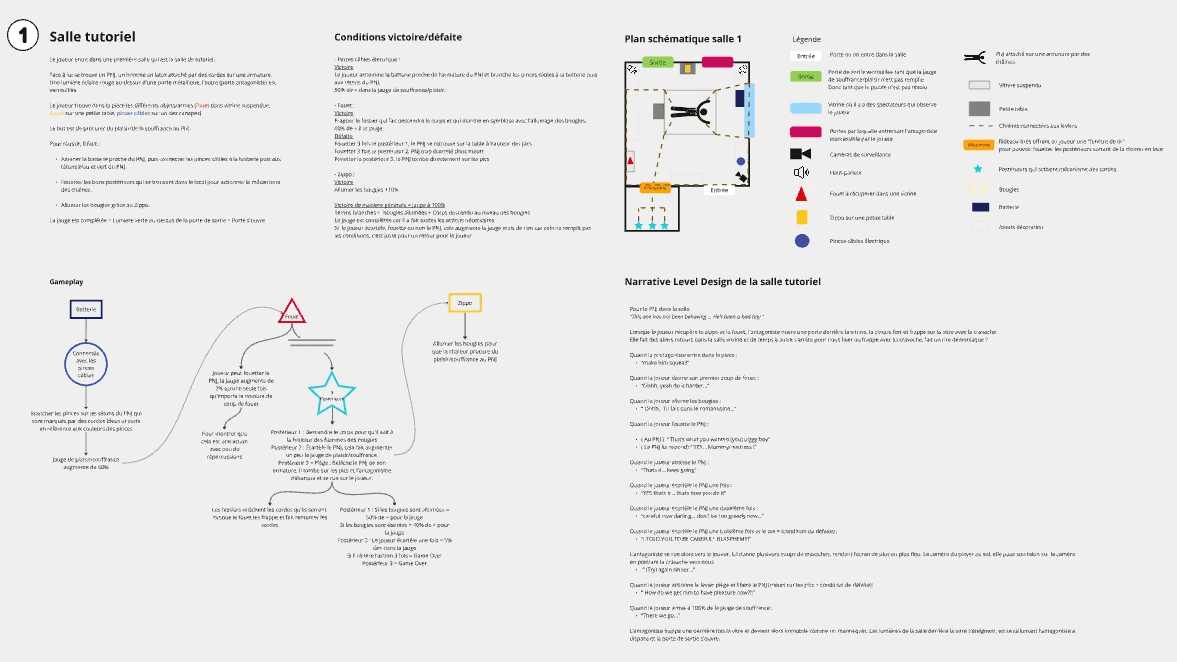
ROOM 1
Narrative Overview:
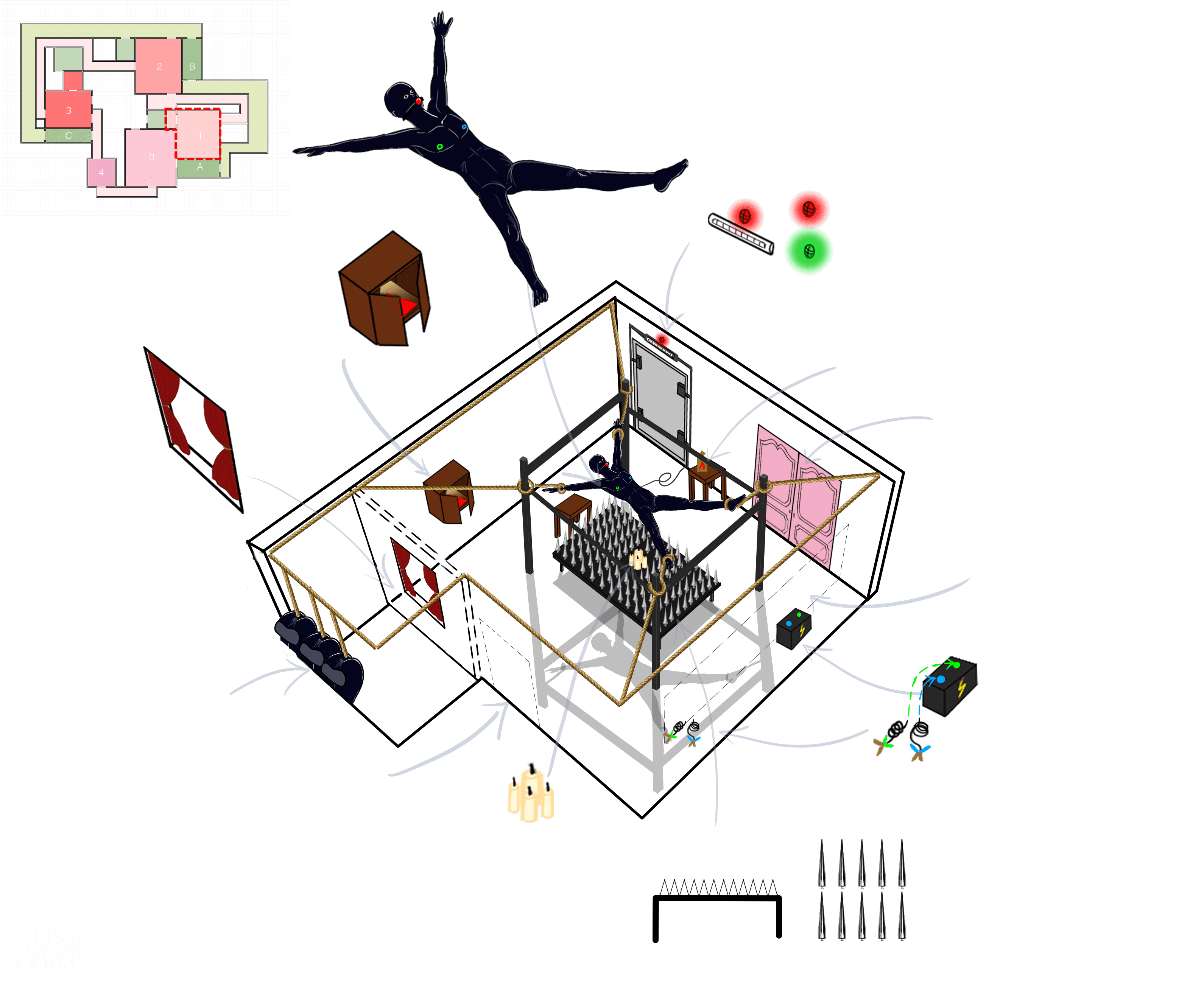
Upon entering, the player sees the submissive suspended and the Mistress's minion silently observing, awaiting any action thaht could alicit shared pleasure. The room is structured around the guest, the player is free to explore, observe and act. Subtle cues guide the player toward fulfilling the guest's desires.
Intent:
Learn systems without pressure
Introduces all core tools (whip, battery, clamps, zippo)
Establishes link between action and consequence
Encourages experimentation
Key Actions:
Connect battery to NPC
Use whip to activate mechanisms
Light candles with Zippo
→ Full gauge unlocks exit
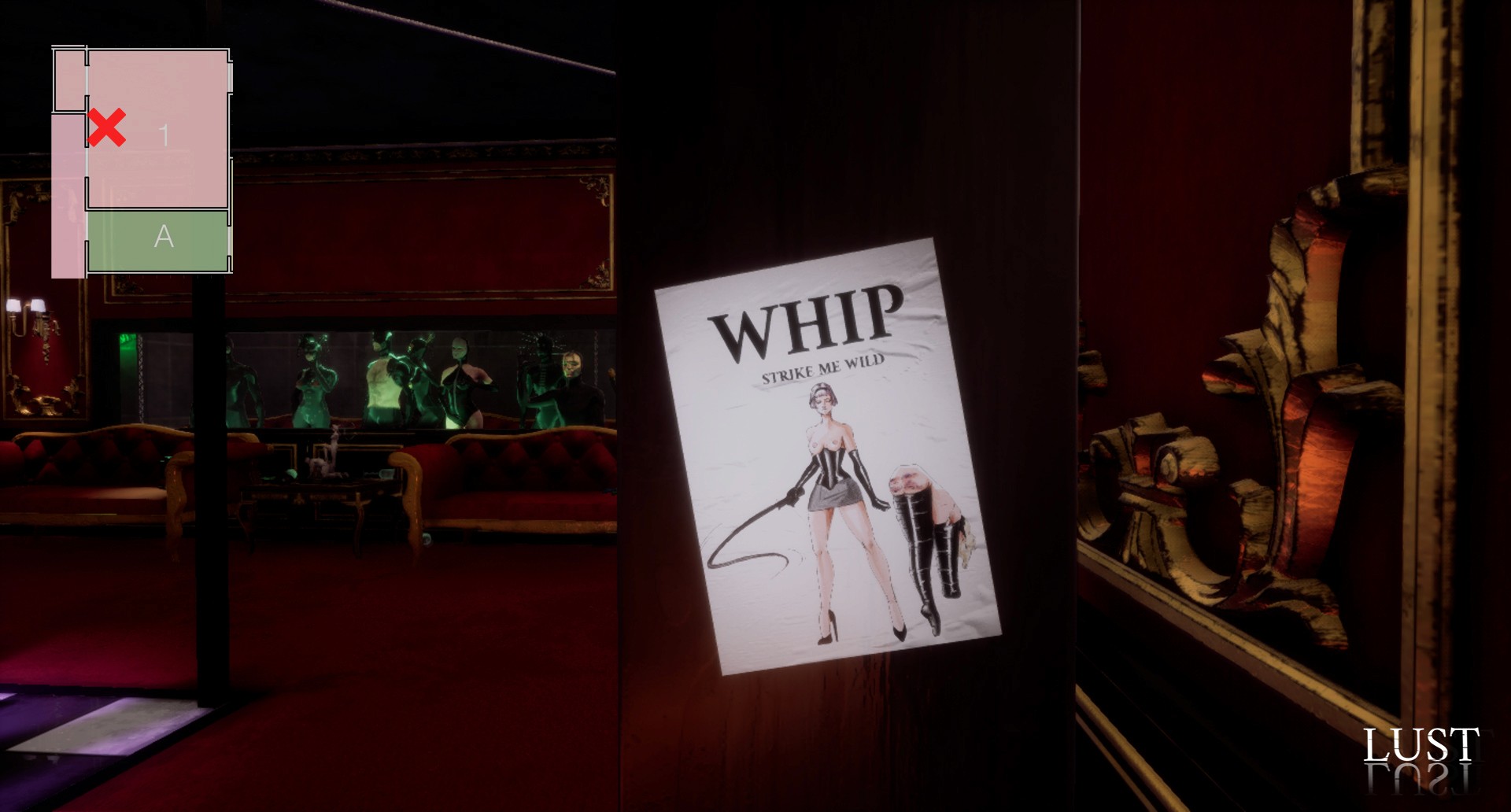
Environmental Cues
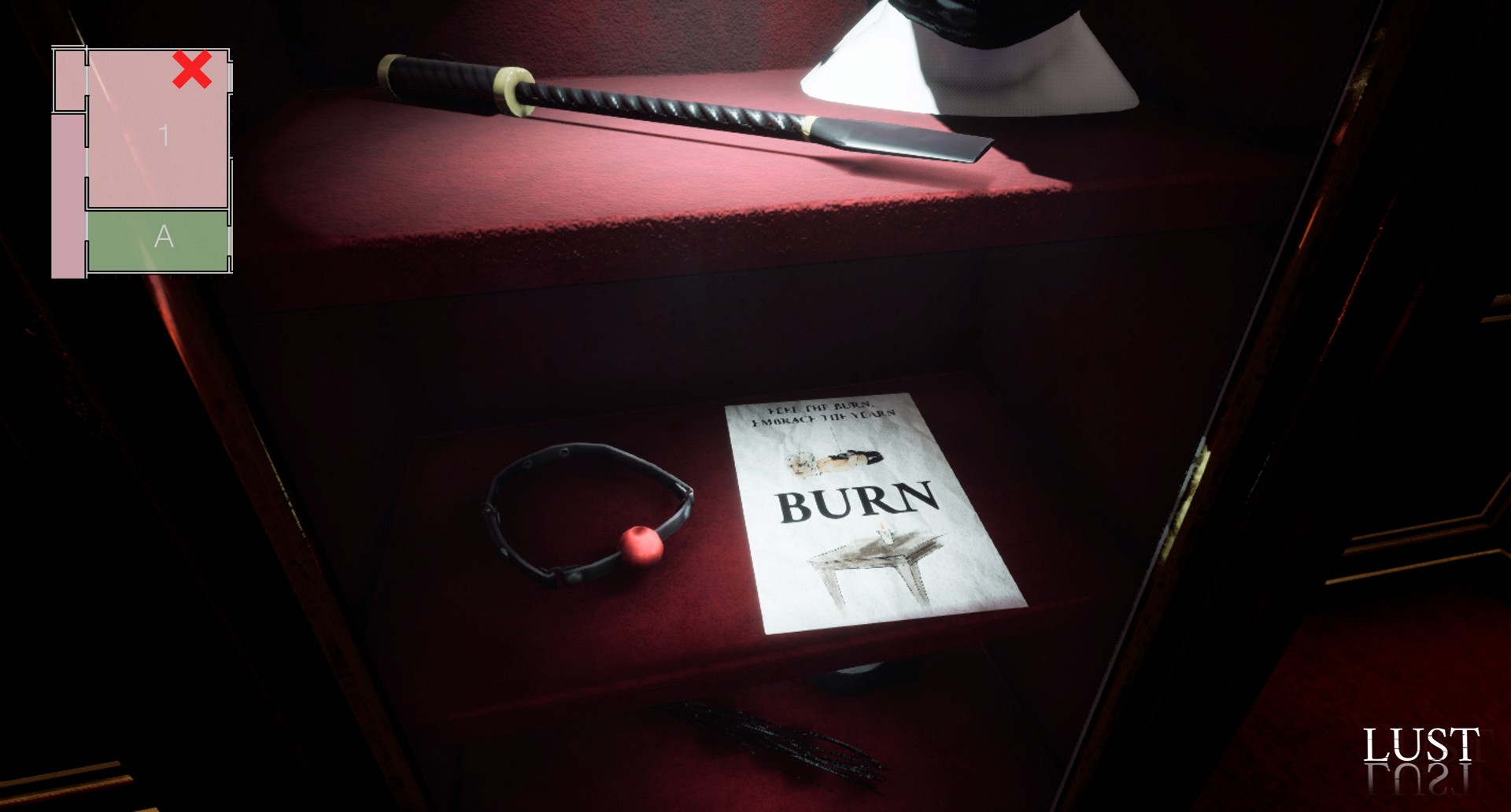
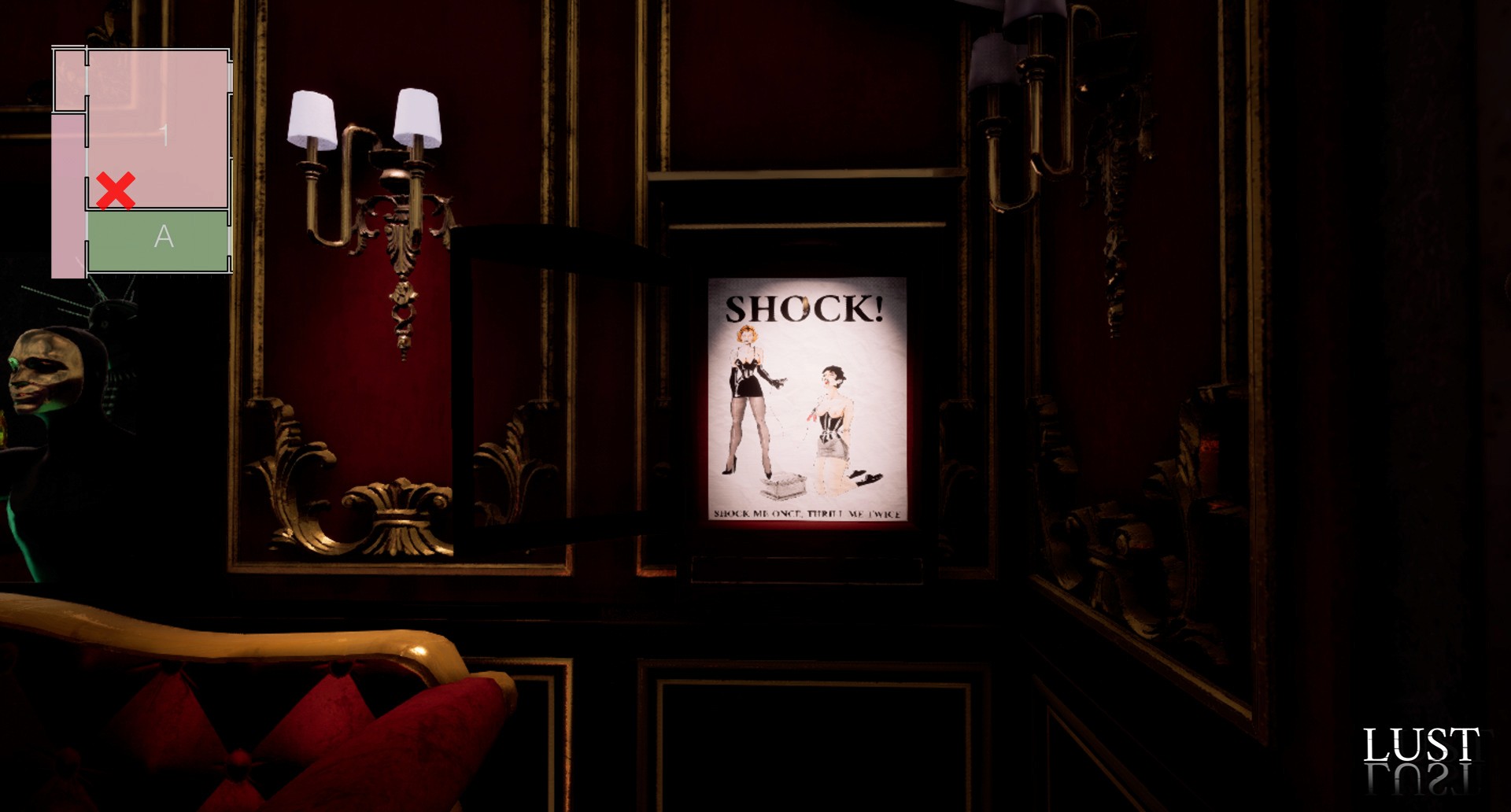
ROOM 2
Narrative Overview:
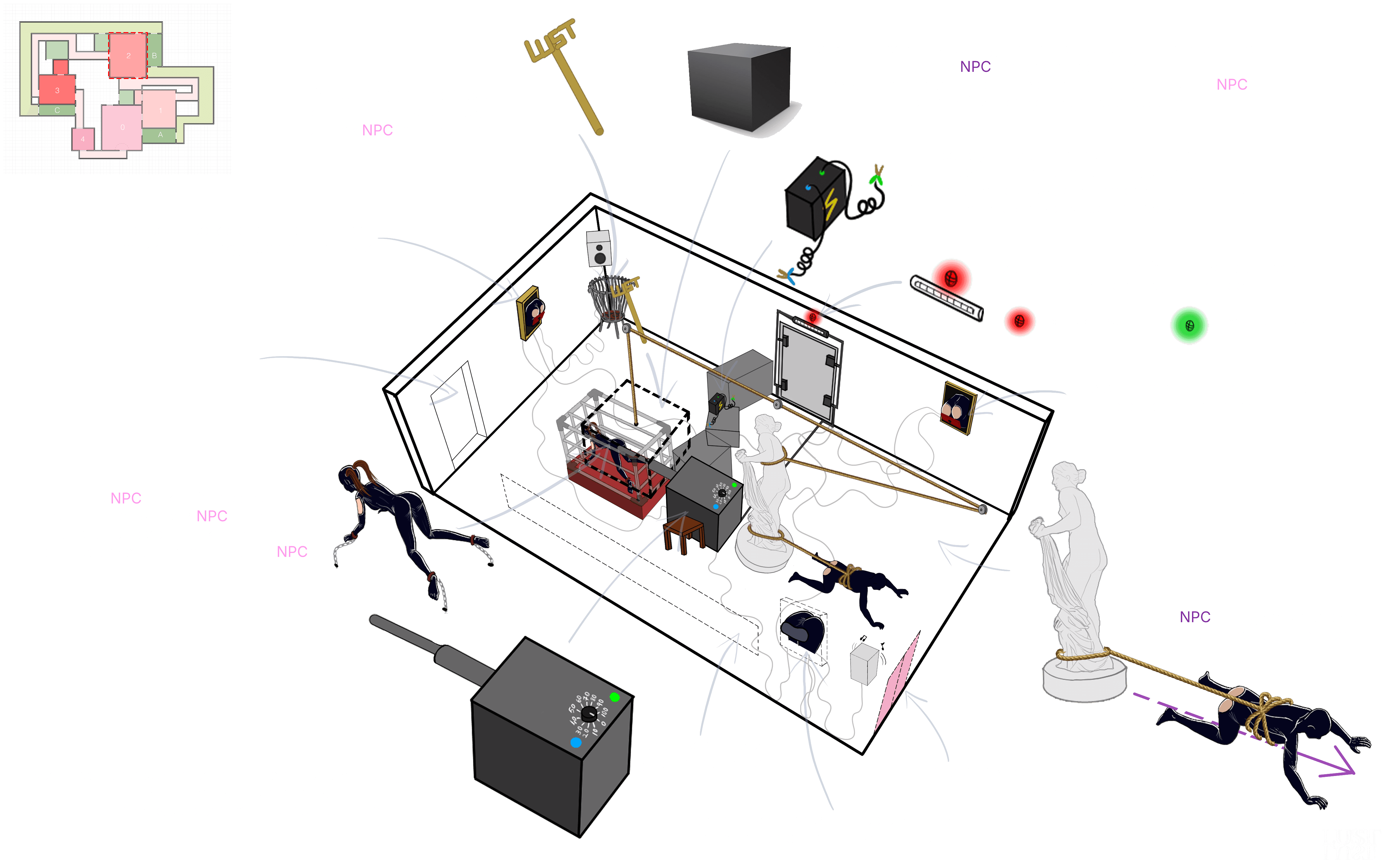
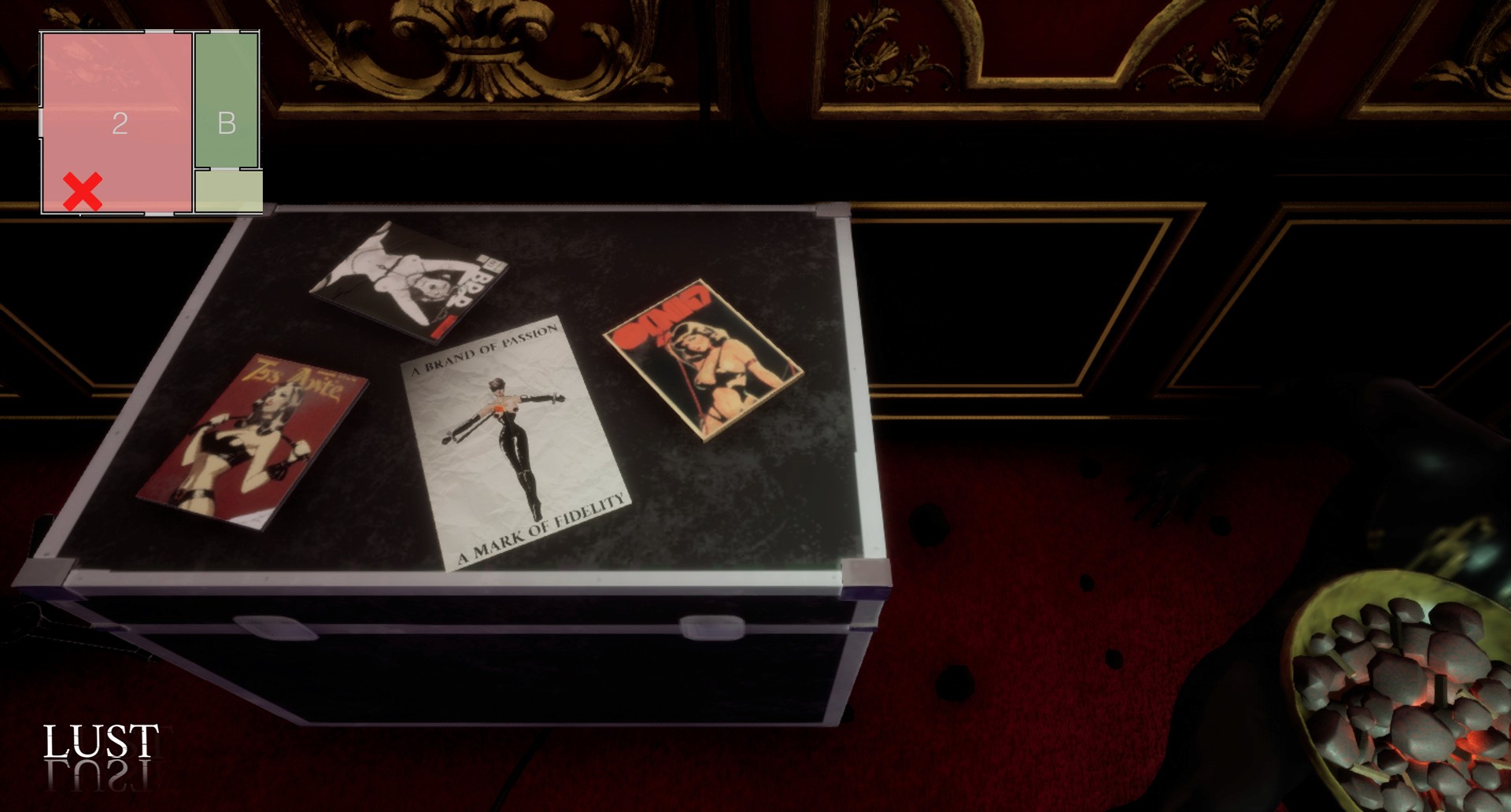
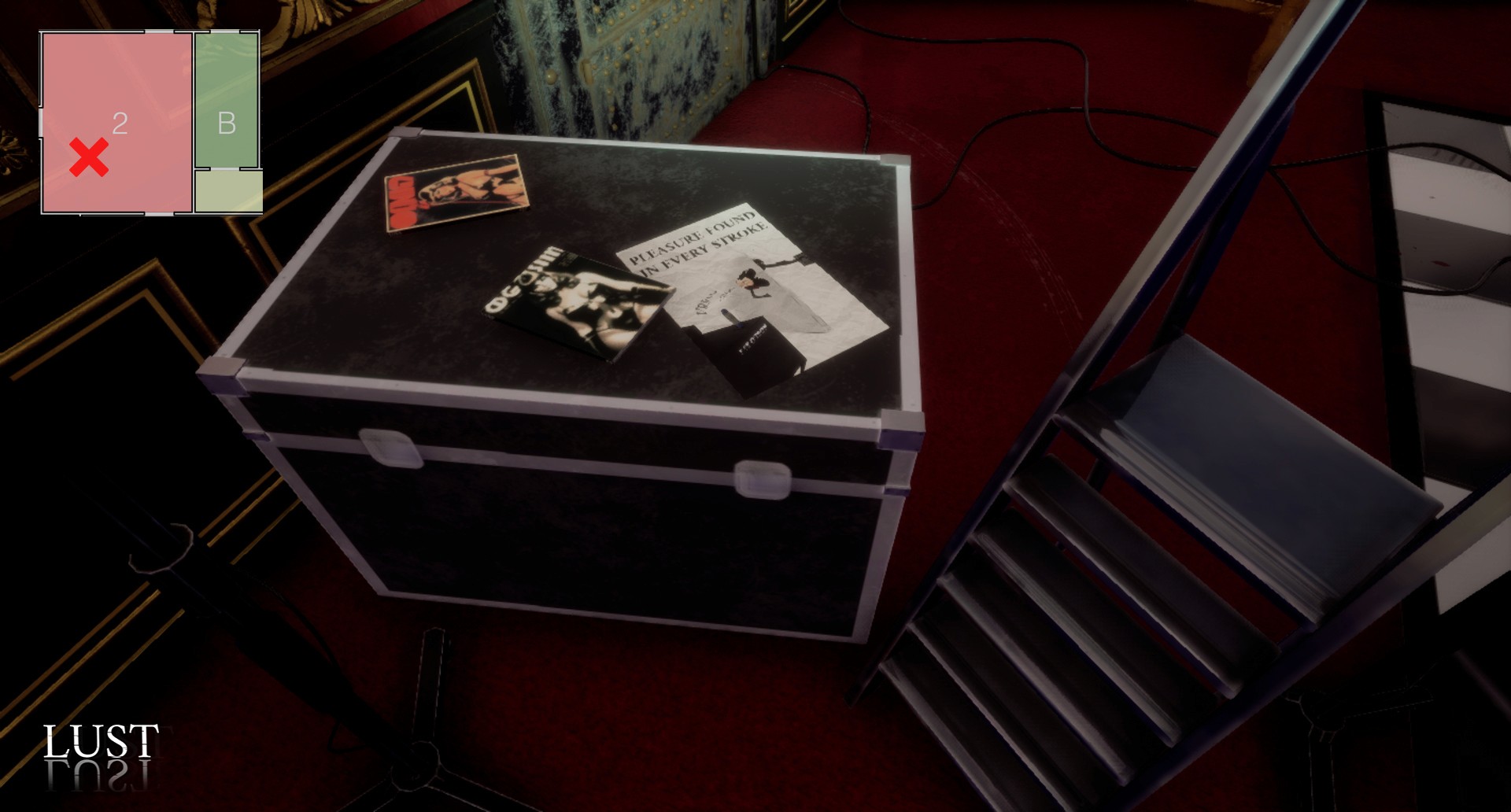
The player enters a room resembling a movie set. A submissive is locked in a cage, another tows the Mistress’s statue. Observation and experimentation remain crucial. Actions now influence multiple systems and NPCs.
Intent:
Anticipate and coordinate actions
Multiple systems interact simultaneously
Introduction of risk (machine overload, spatial constraints)
Key Actions:
Power machines via battery system
Control power levels to avoid failure
Combine whip, fire and mechanical systems
→ Requires full system understanding
Environmental Cues
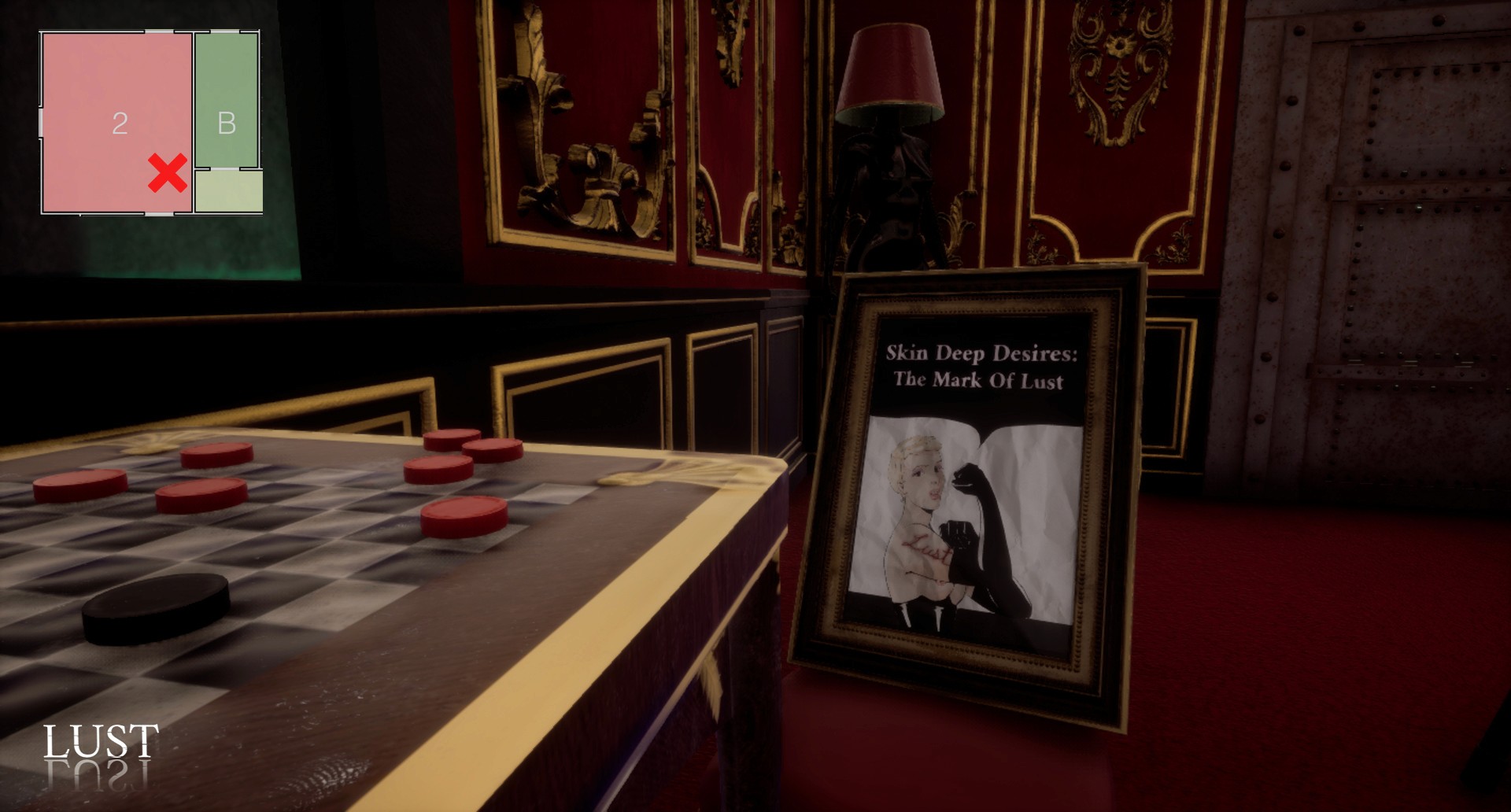
ROOM 3
Narrative Overview:
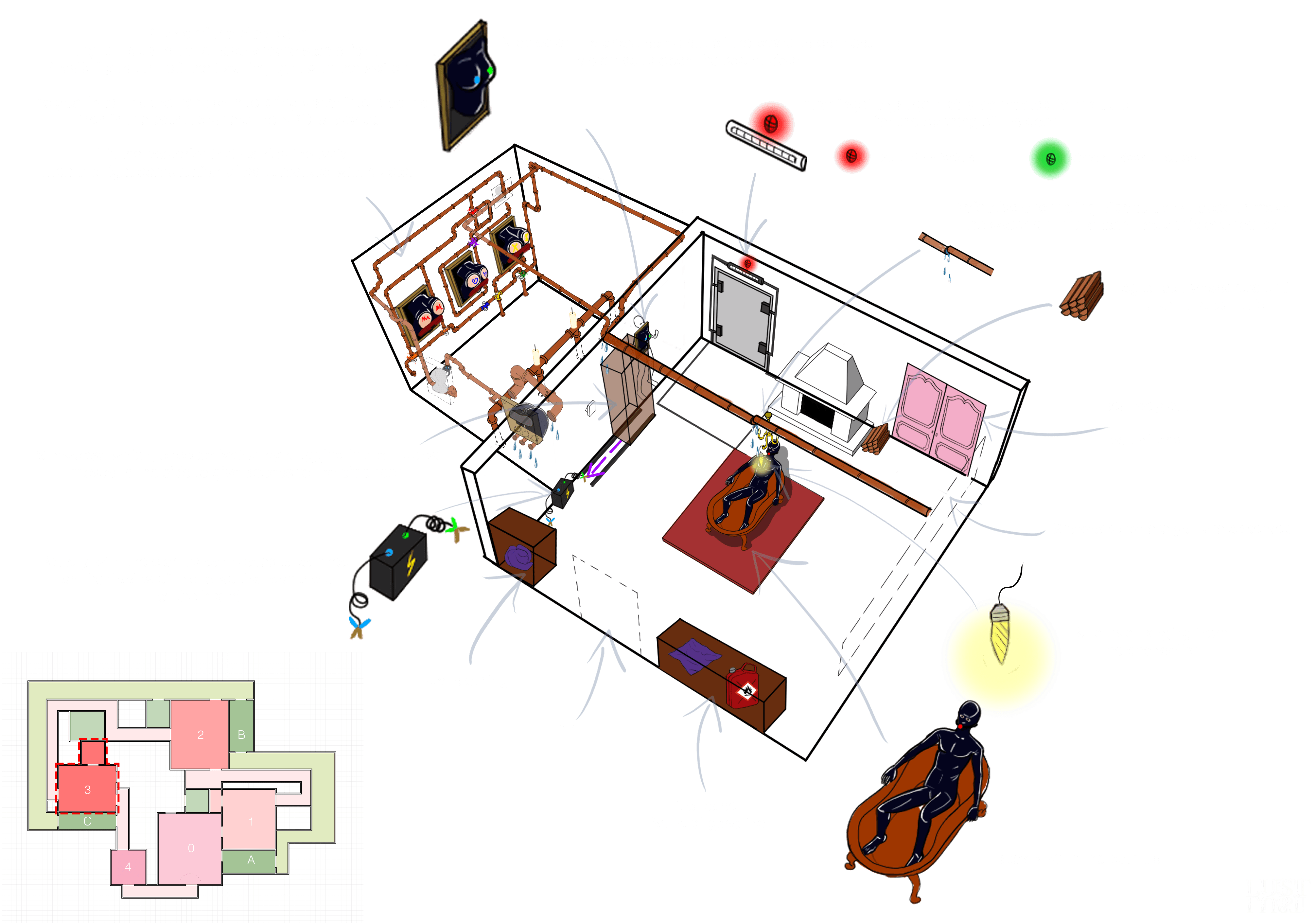
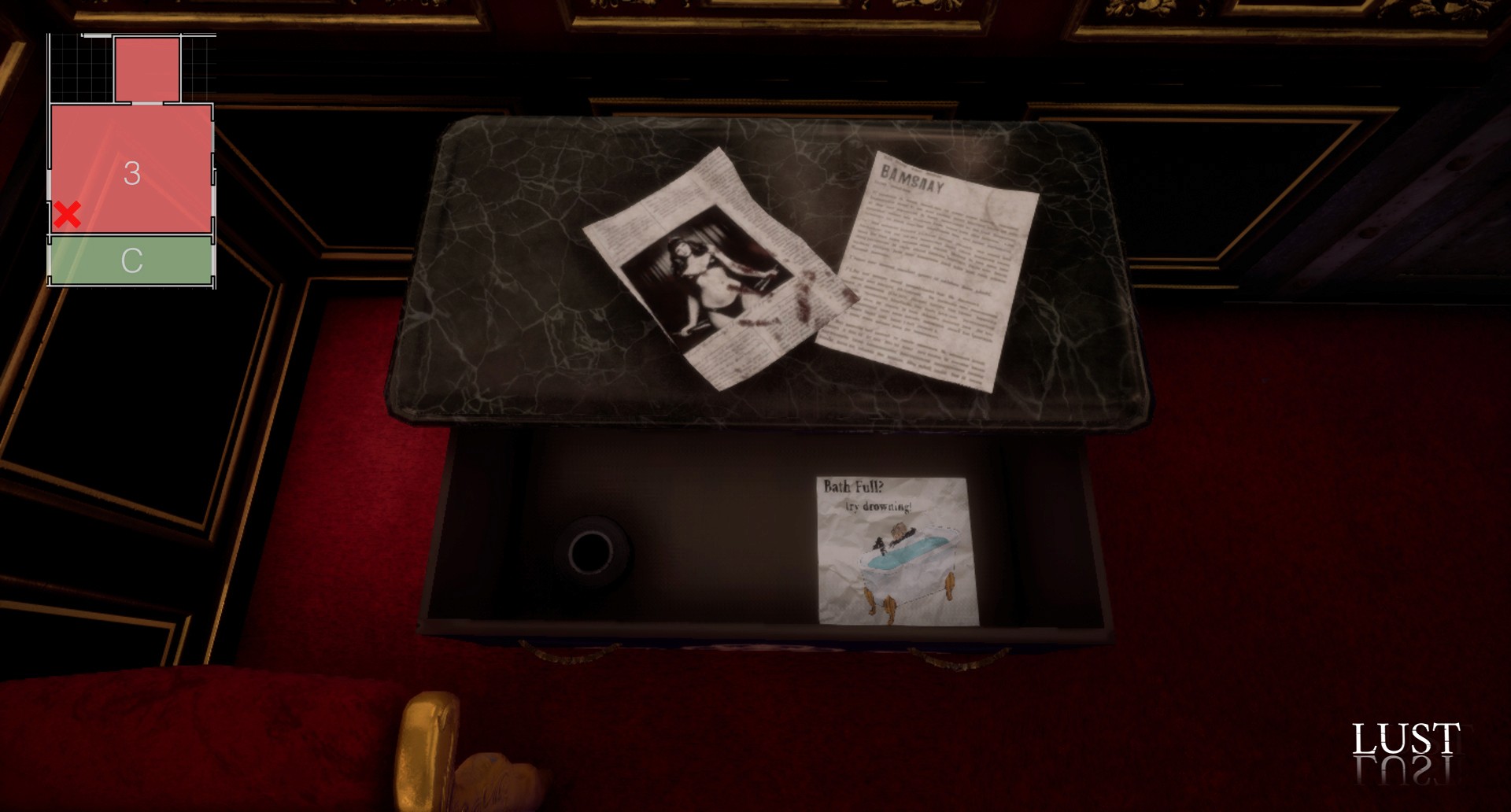
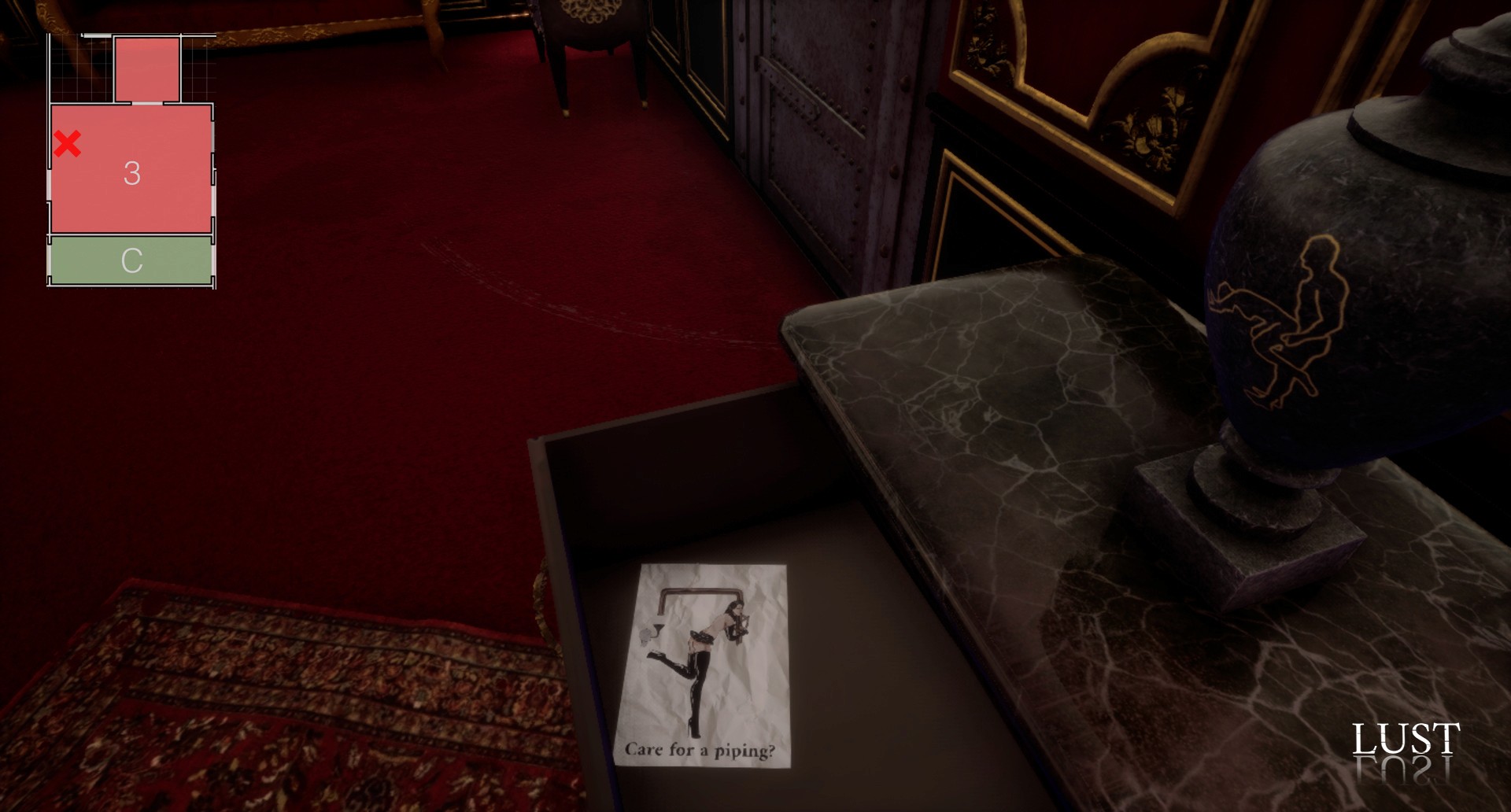
The player faces a new submissive in a bathtub and must manipulate water, fire, and electricity to progress. Pipes and hidden mechanisms create multi-step puzzles. Failure or mismanagement can harm NPC or trigger game over.
Intent:
Multi-step puzzles combining all systems
Increased cognitive load and failure risk
Key Actions:
Route water through pipe system
Combine fire, fuel and environment
Activate hidden mechanisms via power network
→ Correct sequencing unlocks final progression
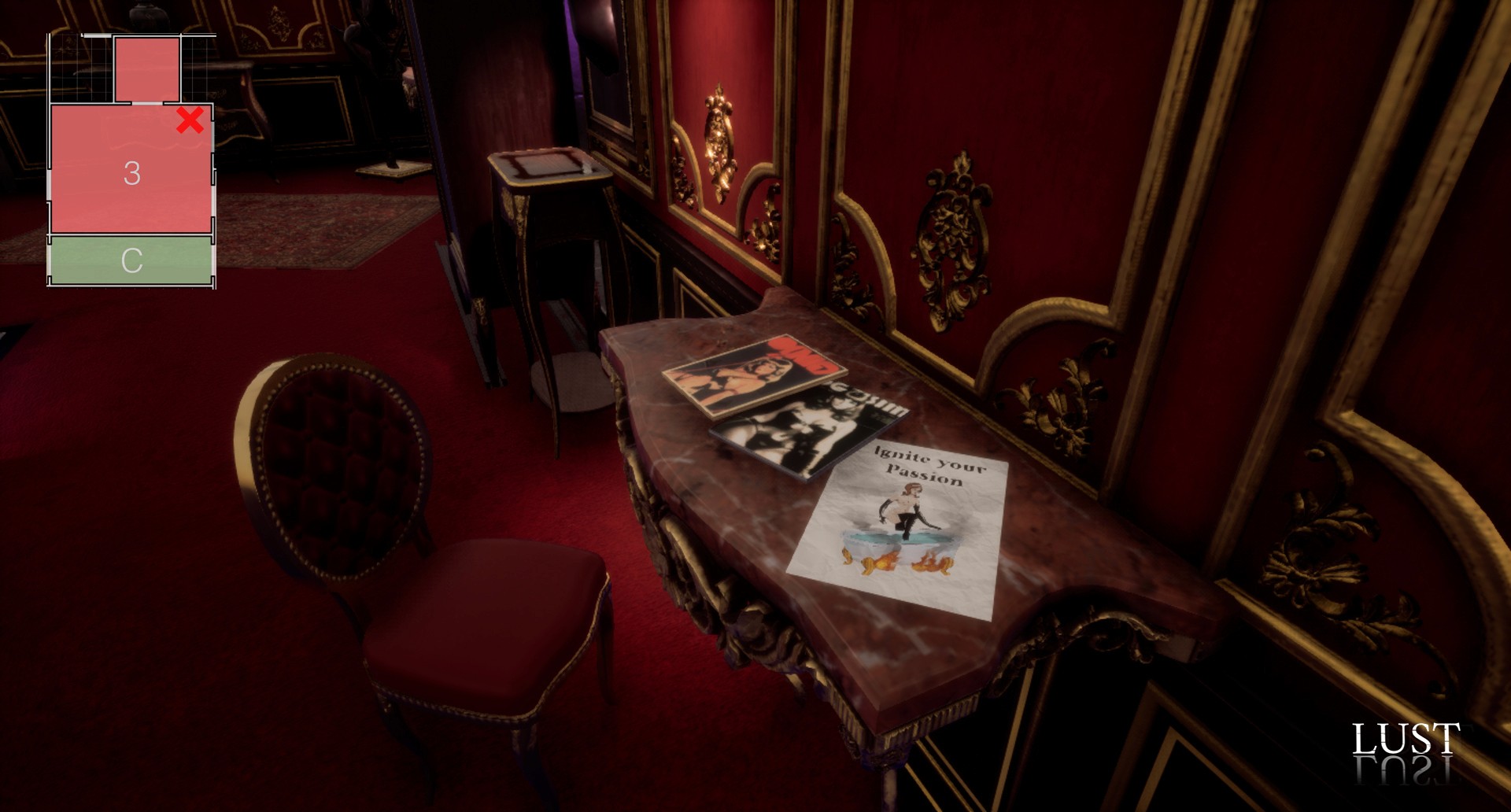
Environmental Cues
WHITE ROOM
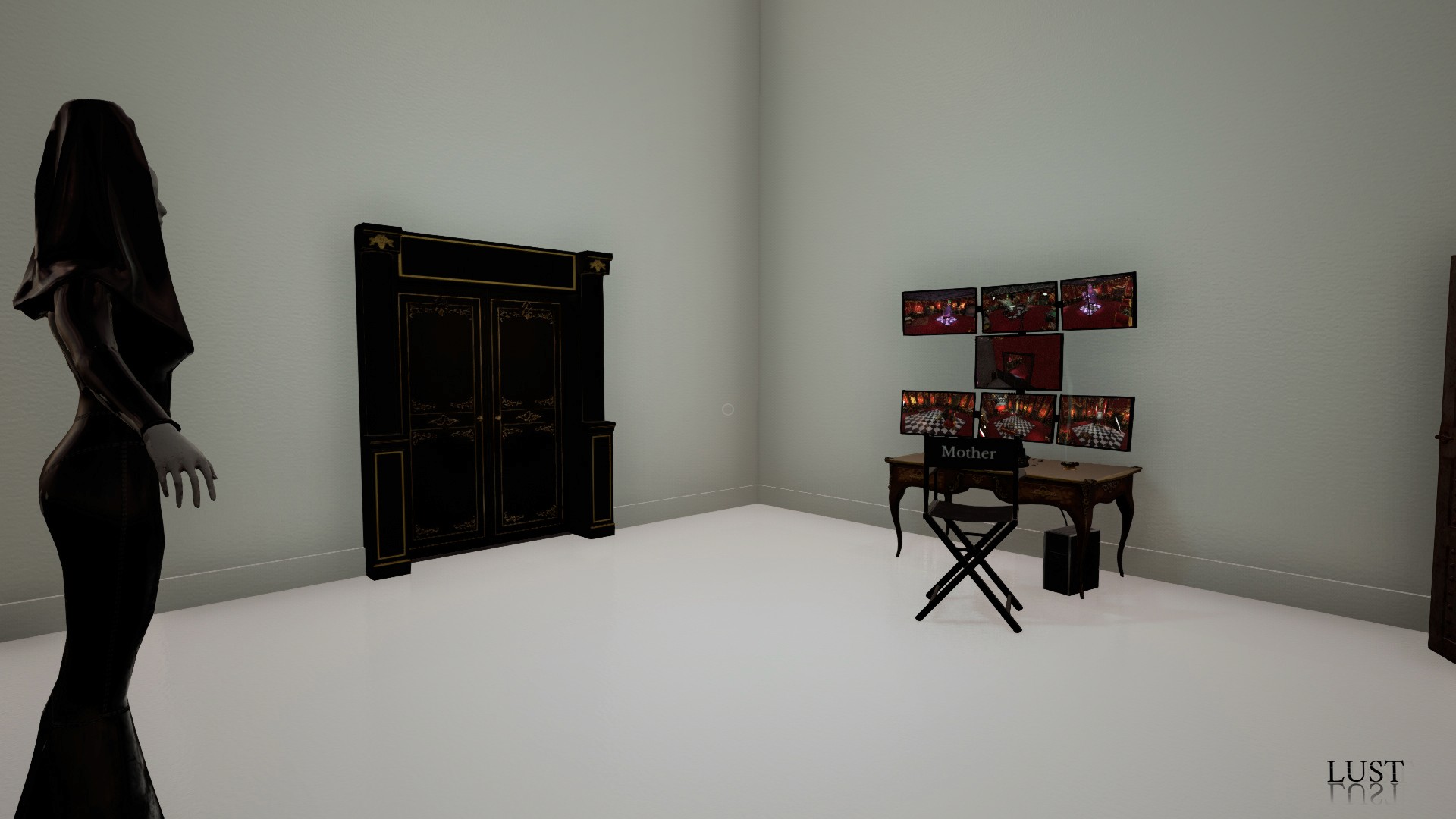
Narrative Overview:
A final room reveals the Mistress’s control over the entire experience. The player witnesses their actions replayed and ultimately takes her place, completing the cycle.
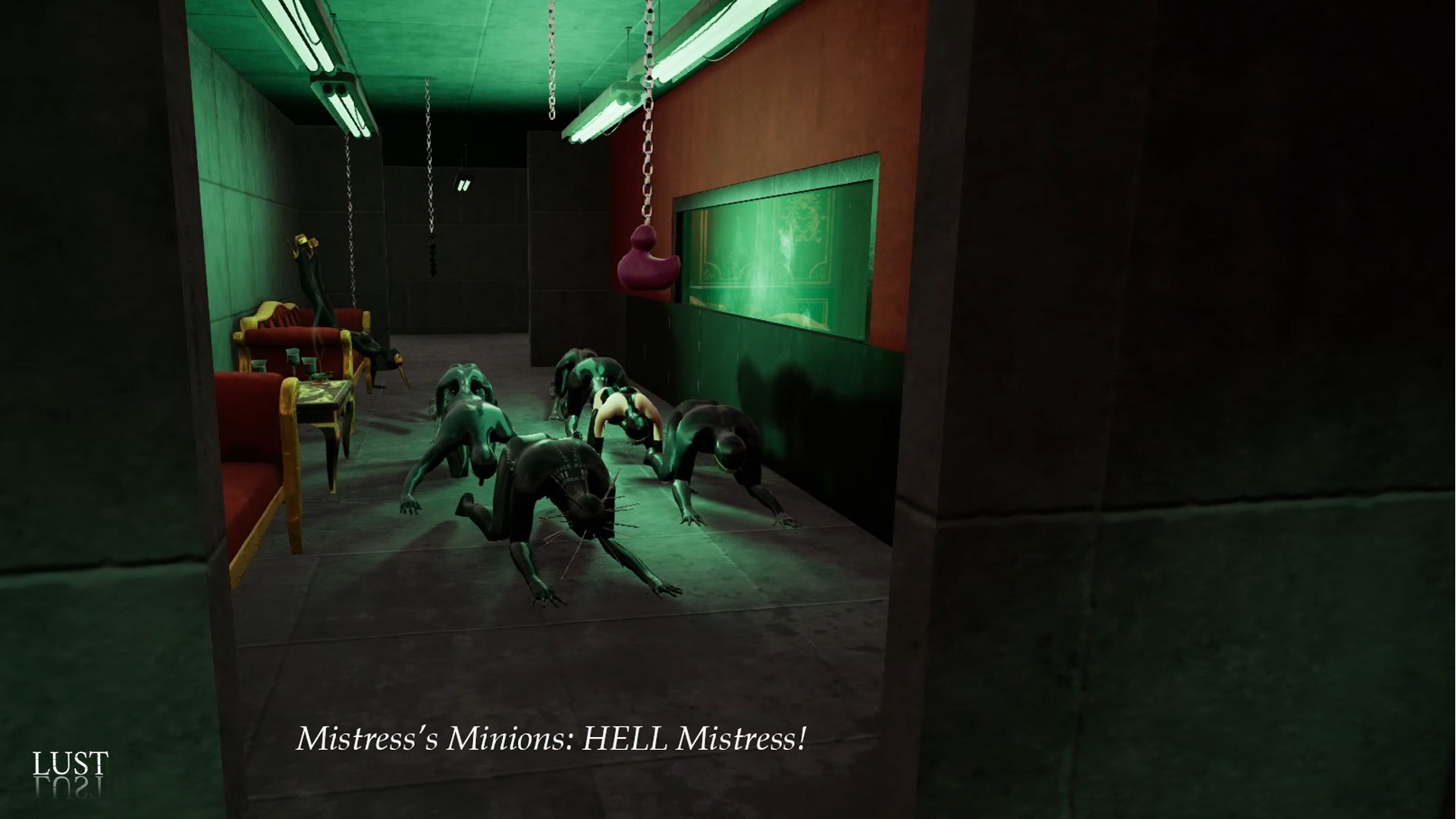
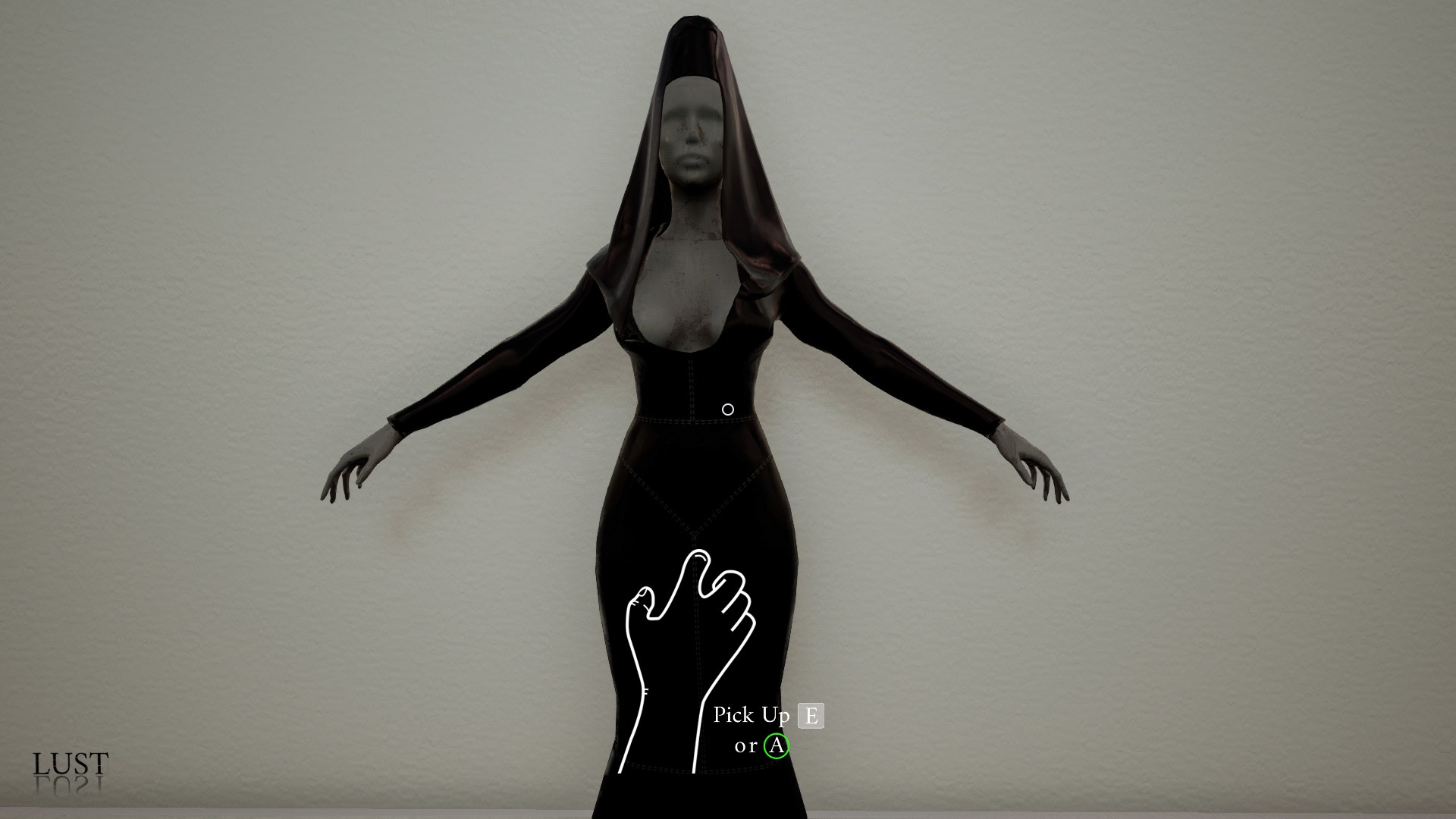
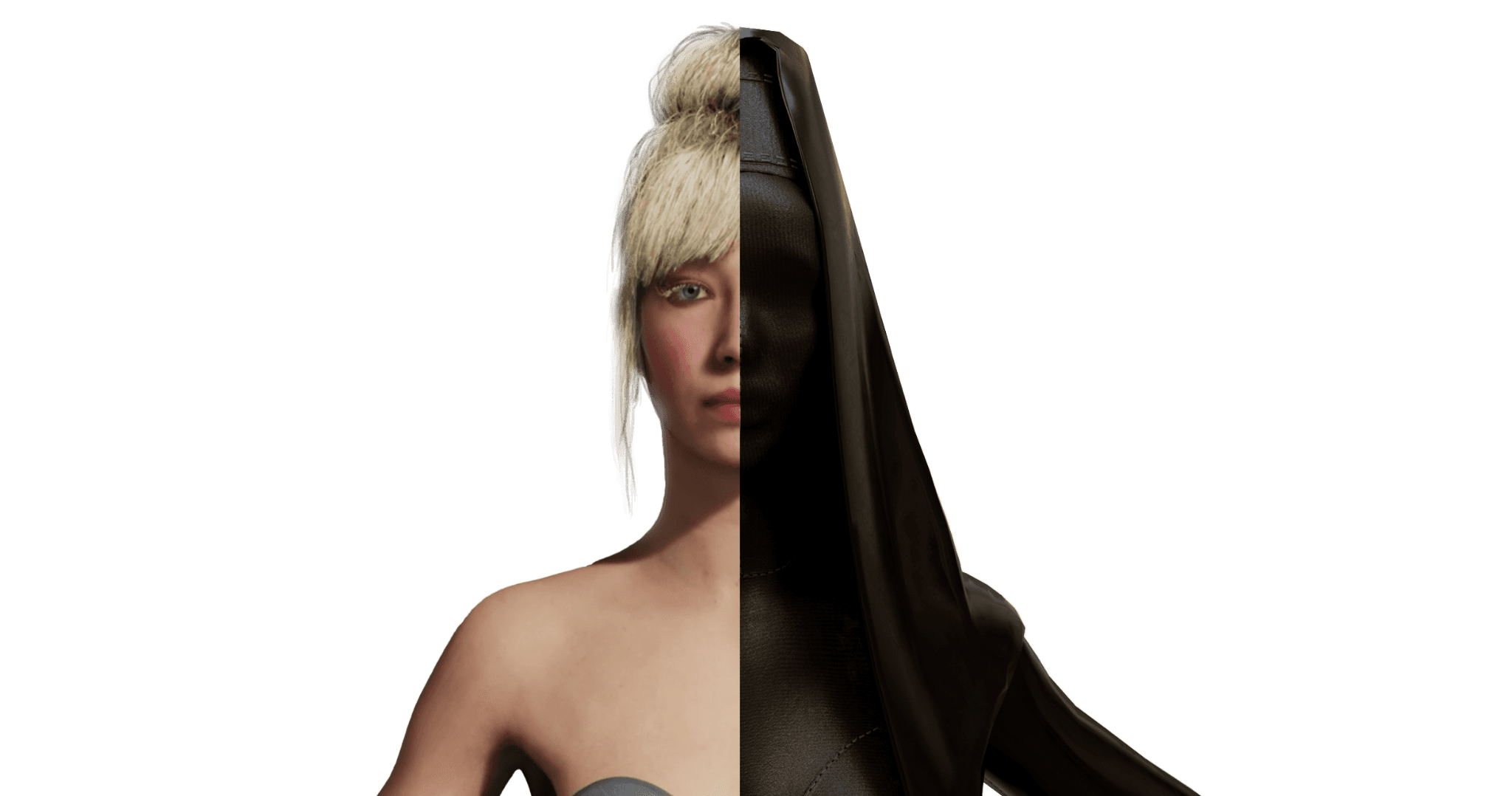
The player becomes the Mistress
MAP TOPOLOGY: THE PANOPTICON CONCEPT


CHARACTER & NPC INTEGRATION
The Mistress:
Provides constant audio feedback and enforces failure states.
Room NPCs (Subjects):
Act as puzzle anchors tied to system progression
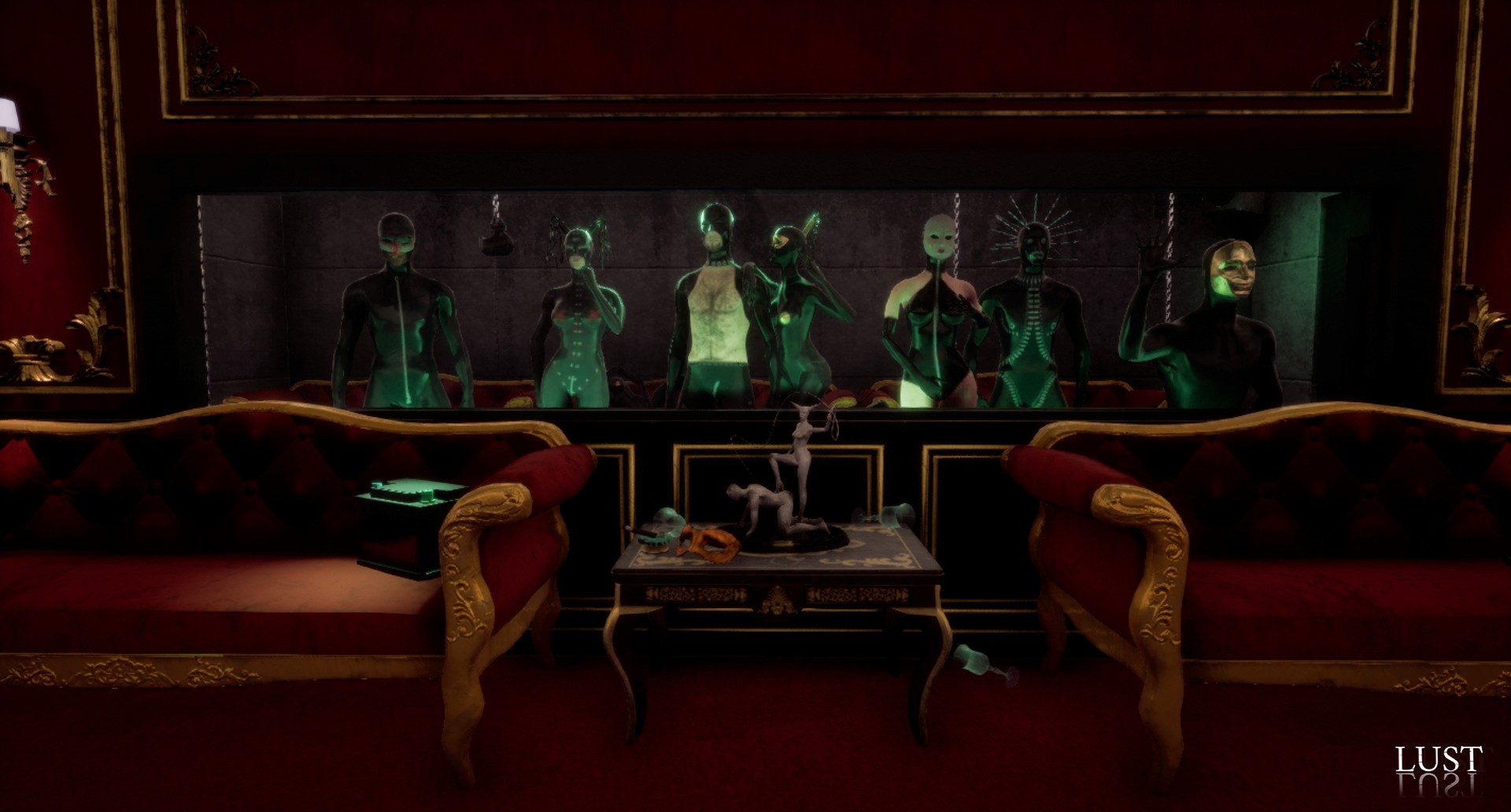
Observers NPCs:
Reinforce the theme of surveillance without direct gameplay impact
LESSONS LEARNED
System Readability is critical:
Room-based progression supports learning, but unclear feedback quickly leads to confusion, especially for non-puzzle players.
Theme vs Gameplay Balance:
Surveillance and authority strengthen immersion, but require stronger systemic impact to fully influence player decisions.
Audience Sensitivity:
The BDSM theme strongly affects reception and requires clear framing to ensure proper interpretation.