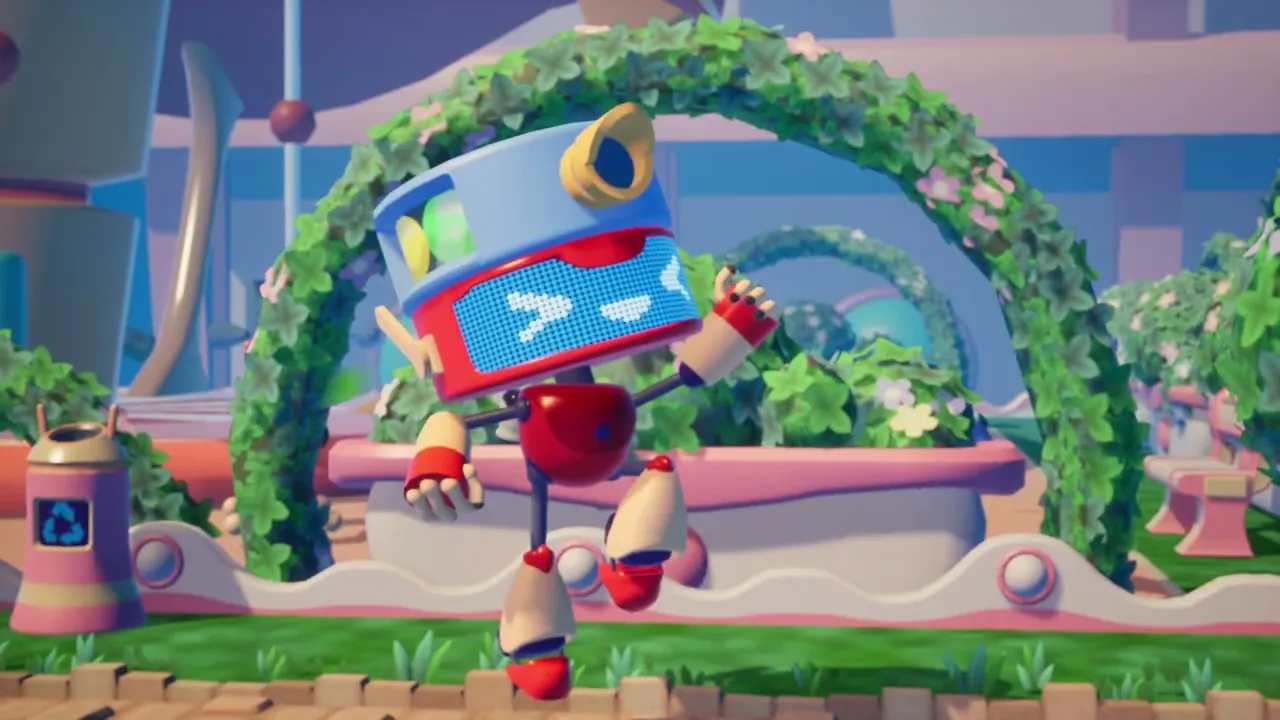
Stackhead
Bring chaos in an amusement park
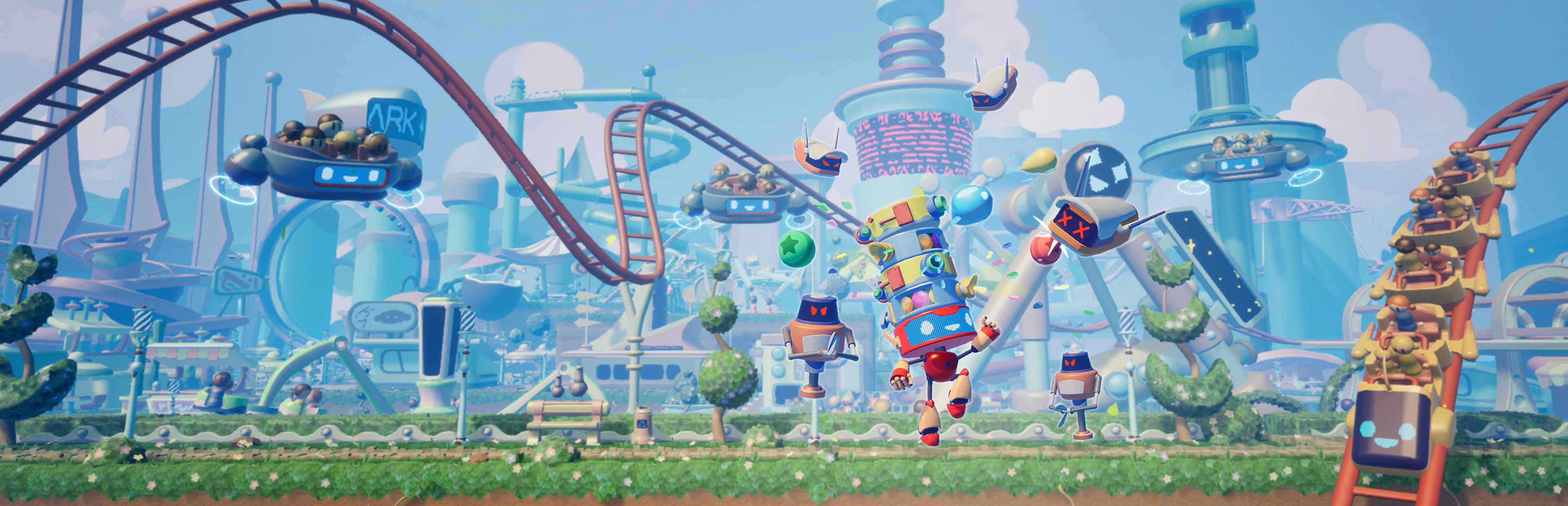

PITCH:
Stackhead is a 2.5D Platformer Shooter. You play as Stackhead, a maintenance robot who works in a too-perfect amusement park. He is tired of monotony of the park, so he decides to explore the attractions, facing robots controlled by AI and bringing surprise and delight wherever he goes.


First Prize for Technical Excellence - ESMA
ROLE & CONTEXT
Role: Level & Narrative Designer, Level & Lighting Artist, Producer
Platform: PC, Switch | Genre: 2.5D Platformer Shooter | Engine: Unreal Engine
Team: 10 | Duration: 8 months
Project Year: 2025
TOOLS
Unreal Engine, Photoshop, Maya, Miro, Googles docs, Canva
GAME INSPIRATION
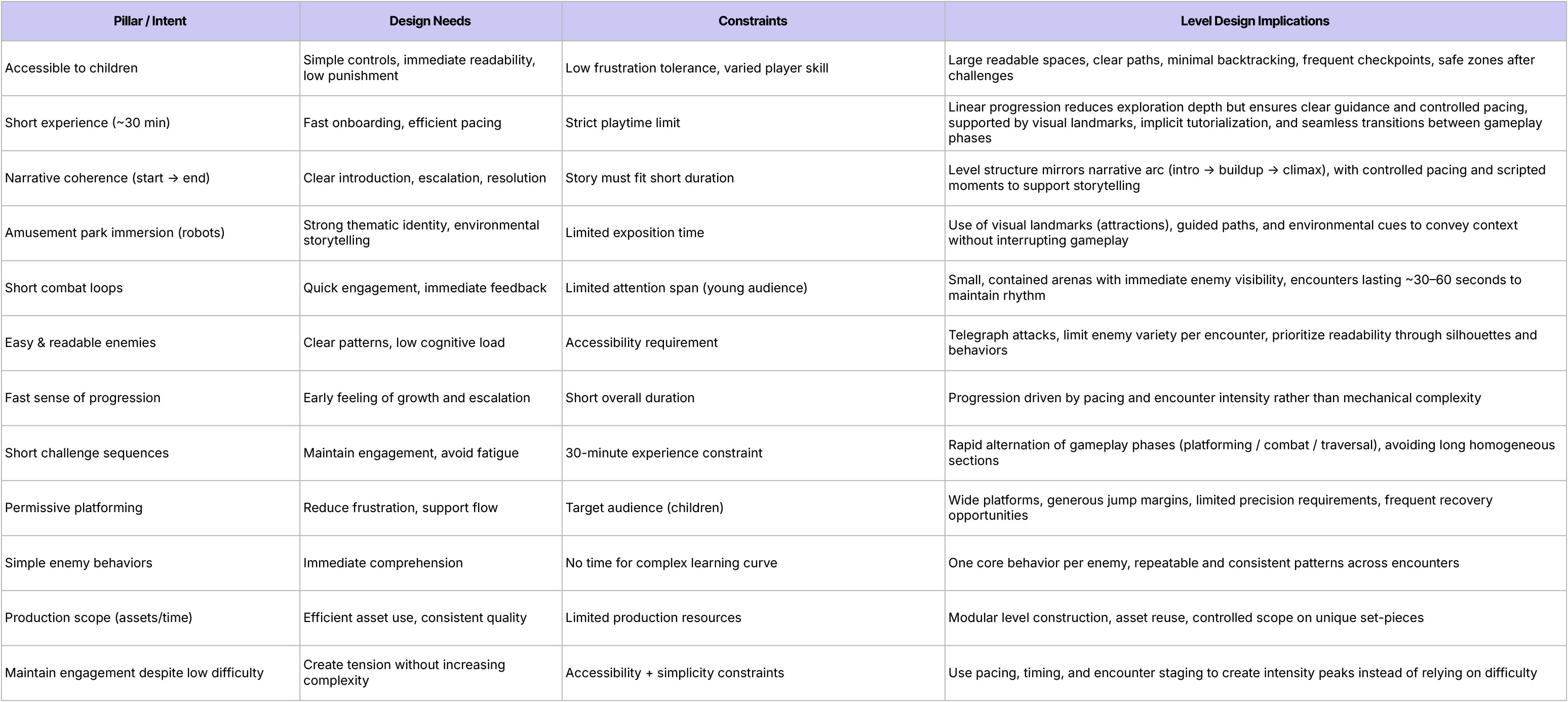
This project was inspired by Megaman 11, Mighty Goose and Kirby's Return To Dreamland. So the level design has adapted to a succesion of quick and short challenges, permissive platformings, enemies with simple behaviors, quick and engaging combats.
MY MISSIONS
Design sandbox layouts to test core mechanics and support fast-paced, readable gameplay
Block out and refine levels to ensure smooth flow and guidance
Combine platforming and combat into dynamic sequences
Place enemies strategically and configure behaviors using designer-friendly tools
Balance gameplay through continuous testing and iteration
Optimize (LOD, Level Streaming, collisions)
Set lighting to support readability, mood, and player guidance
Conduct playtests and integrate feedback
RESEARCH PHASE
Studying 2D and 2.5D platformer game and in the book An architectural approach to Level Design to define movement systems, combat structure, camera behavior and spatial layouts.
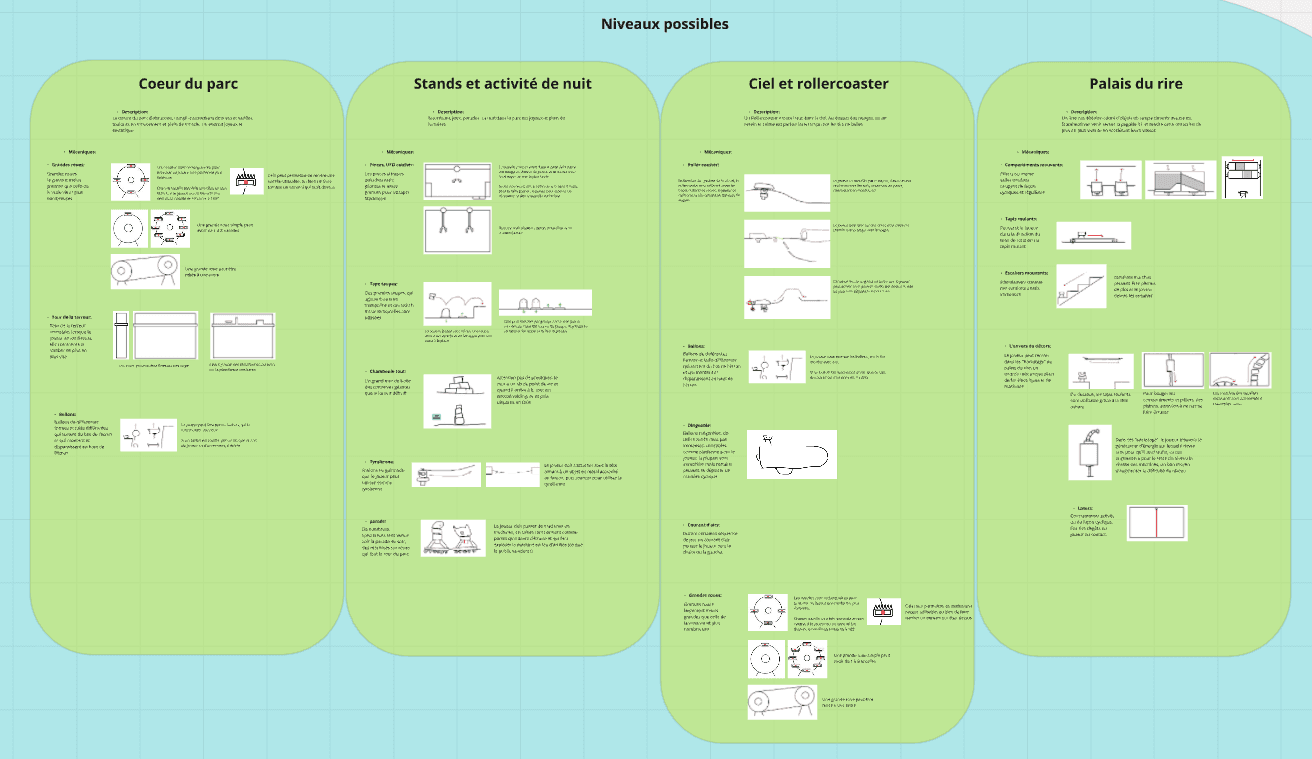
Sketching gameplay scenarios for an amusement park setting, combining platforming and combat to create varied and engaging challenges.
LEVEL DESIGN SCOPE
Iterative process driven by playtesting, simplifying or removing mechanics for linear side-scrolling structure
Levels designed for ~30-minute playtime for young audiences
Fewer but progressively longer levels to ensure smooth learning curve and mastery of mechanics
Constraints guided pacing, readability, and encounter design
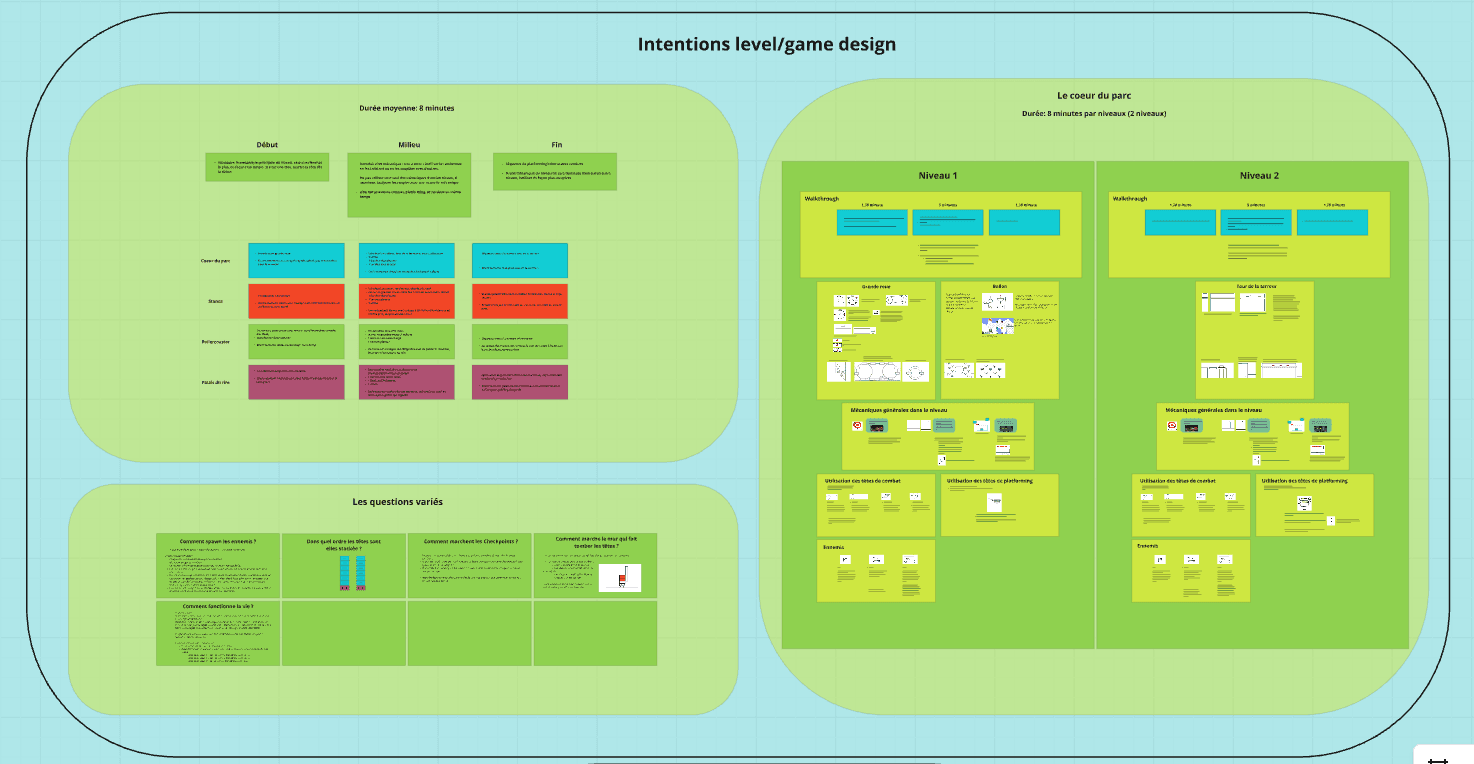
PROJECT EVOLUTION
Initial structure: multiple short levels with many mechanics introduced early
Issues identified: inconsistent pacing, mechanic overload → reduced clarity
Change: fewer, longer levels; simplified mechanics; improved pacing and flow
Result: smoother progression, clearer learning curve, better balance between platforming and combat
INITIAL STRUCTURE ———> RESULT







LEVEL DESIGN OVERVIEW
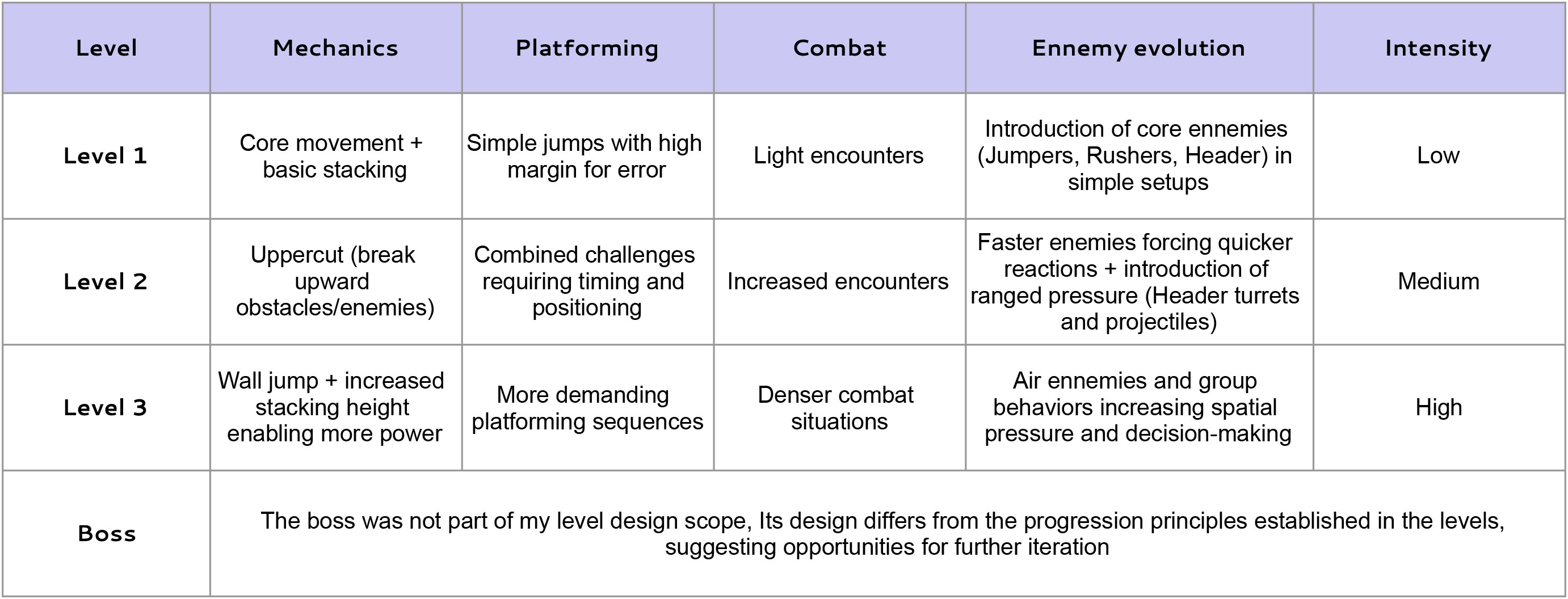
Core System: Stacking System Progression
The main stacking system (heads) evolves from shooting towards destroying obstacles to more complex fights.
Design Principles:
Clarity over complexity
Simple enemy behaviors and readable situations to avoid player confusion
Progressive mastery
Each mechanic is introduced in isolation, then combined and intensified
Rythm balance
Alternation between platforming and combat to maintain engagement and pacing
LEVEL BREAKDOWN
LEVEL 1
Introduce core movement progressively
Teach each mechanic in isolation within a safe place
First combination (jump+shoot) to validate understanding
Reuse enemies to reinforce recognition
Establish core gameplay loop: move → avoid → attack
↓ Annotations on map ↓






LEVEL 2
Reinforce core movement and shooting under moderate pressure
Introduce timing & positioning challenges
Teach switch mode mechanic with heads (store/deploy heads)
Gradual enemy aggression with color cues
Reward exploration with detour zones
↓ Annotations on map ↓



LEVEL 3
Introduce walljump, aerial threats and combined enemy behaviors
Encourage adaptive playstyles, fast decision-making, and spatial awareness
Layered challenges combining movement, hazards, and combat
Optional paths and coins reward mastery
↓ Annotations on map ↓

ENEMY DESIGN APPROACH
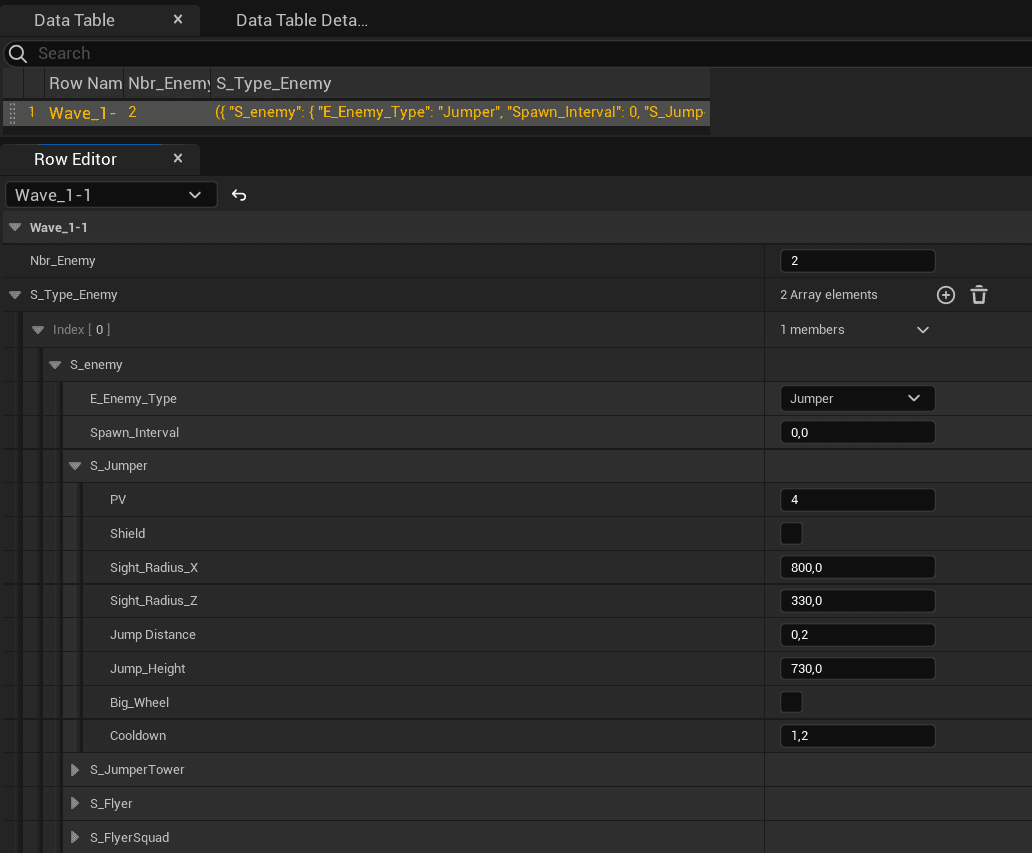
Focus on evolution and variation of existing enemies rather than quantity
New behaviors emerge through combinations (e.g., turret modes, projectiles)
Supports readability and smooth difficulty progression

Jumper

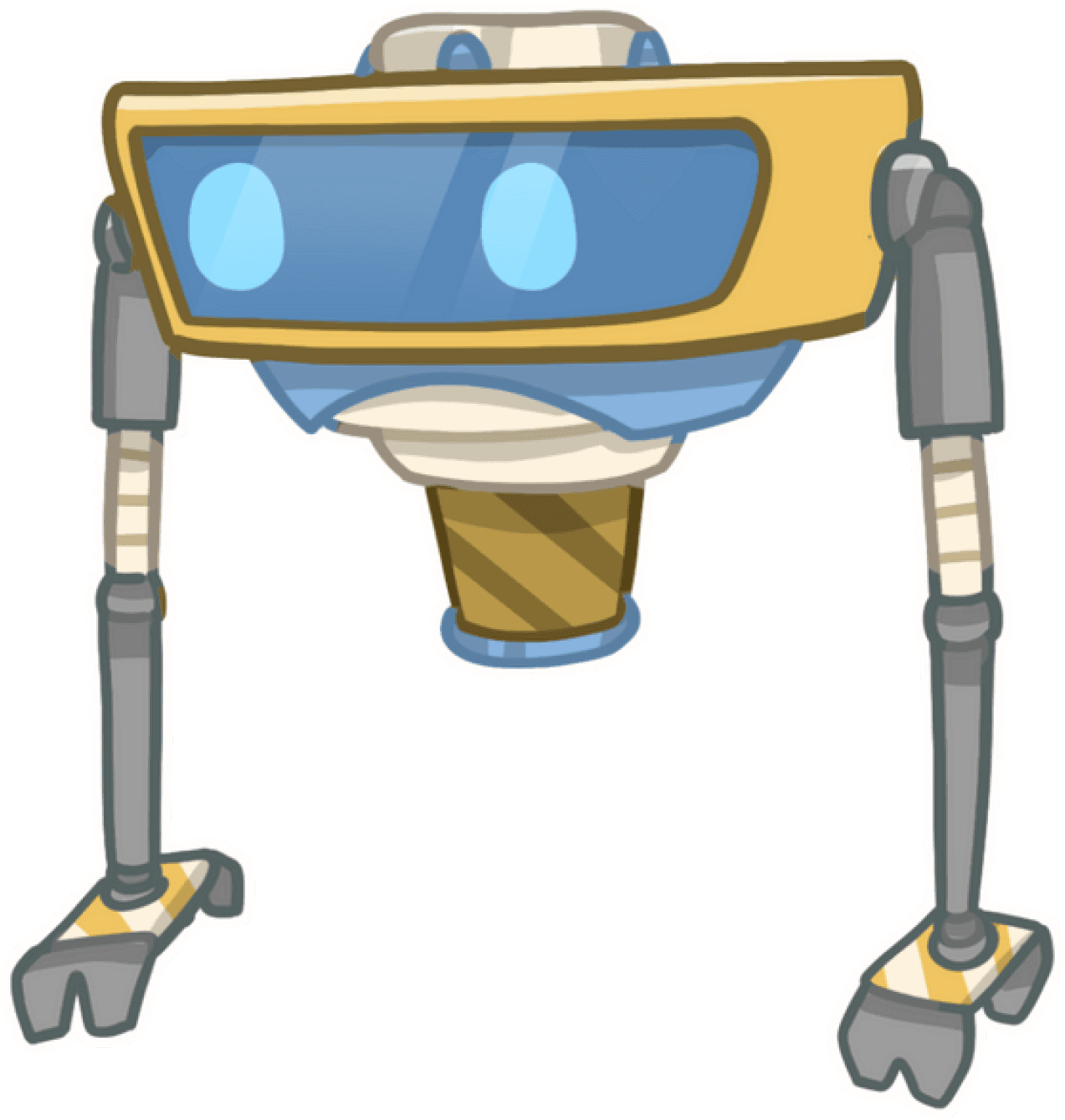
Rusher
Header

Flyer
Jumper difficulty 1/3
Jumper difficulty 2/3
Jumper difficulty 3/3
Rusher difficulty 1/3
Rusher difficulty 2/3
Rusher difficulty 3/3
Header difficulty 1/3
Header difficulty 2/3
Header difficulty 3/3
Flyer difficulty 1/3
Flyer difficulty 2/3
Flyer difficulty 3/3
PLAYER AGENCY & REWARD SYSTEMS
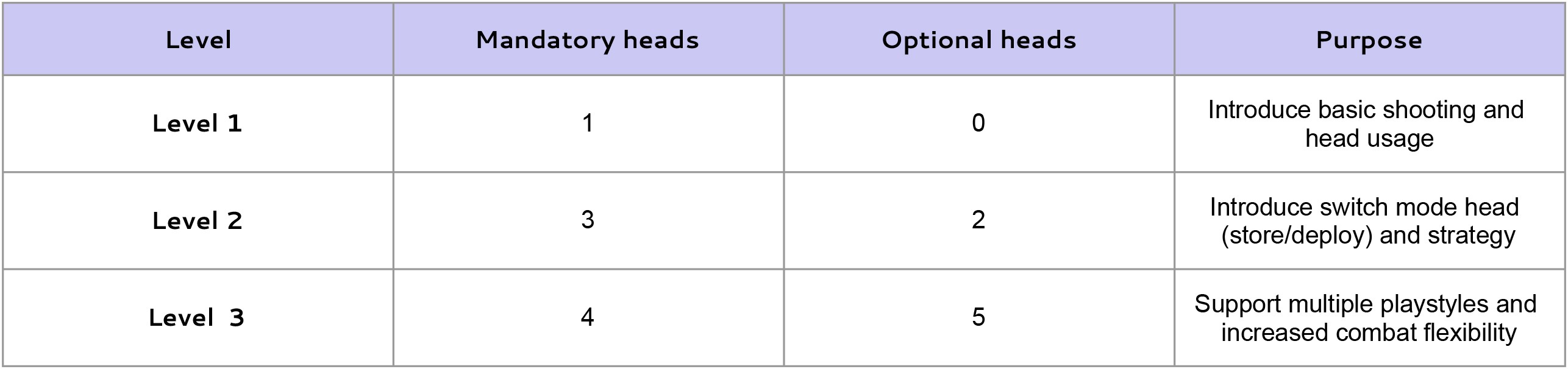
Combat optional in most areas, players can choose playstyle
Encouraging exploration and movement mastery without blocking progression
Heads are:
In some situations an optional power increase
A tool for difficulty self-asdjustment
Player can:
Play safe (avoid combat, minimal heads)
Become powerful (collect more heads)
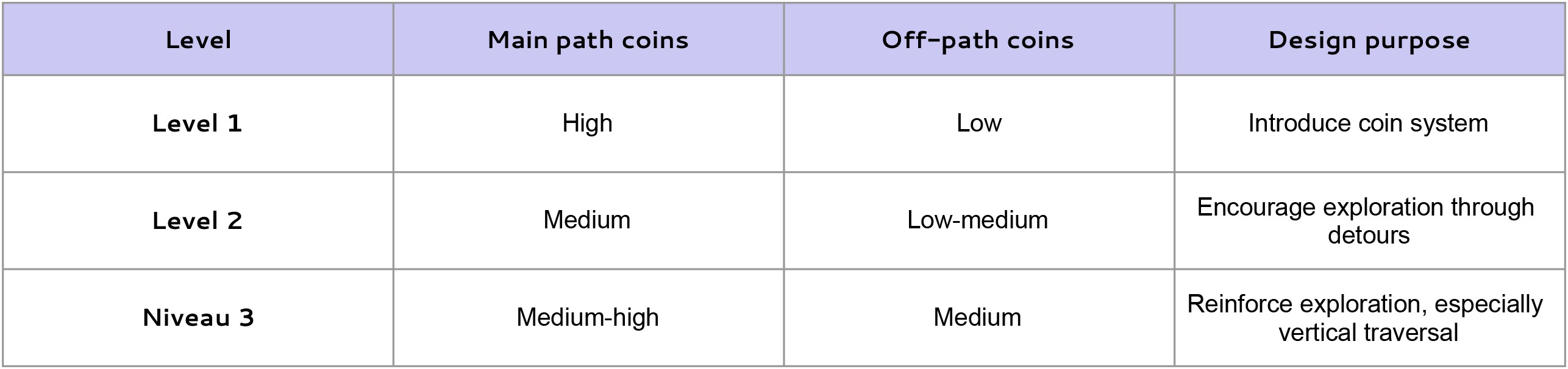
Coins:
100 coins = extra life
Placed in the main path and off-path area
LESSONS LEARNED
Iteration & readability:
Simplifying early mechanics improved clarity and pacing
Target audience clarity:
Young players require highly readable systems and gradual mechanic introduction
Core system scaling:
Stacking mechanic scales from traversal to combat without increasing complexity
Efficient enemy design:
Variation and combination of few enemy types maintain progression while ensuring recognition
Agency vs guidance:
Optional systems support flexible playstyles but need balance to avoid disorientation